Large-scale heat pumps utilize excess heat from Microsoft data centers in Finland

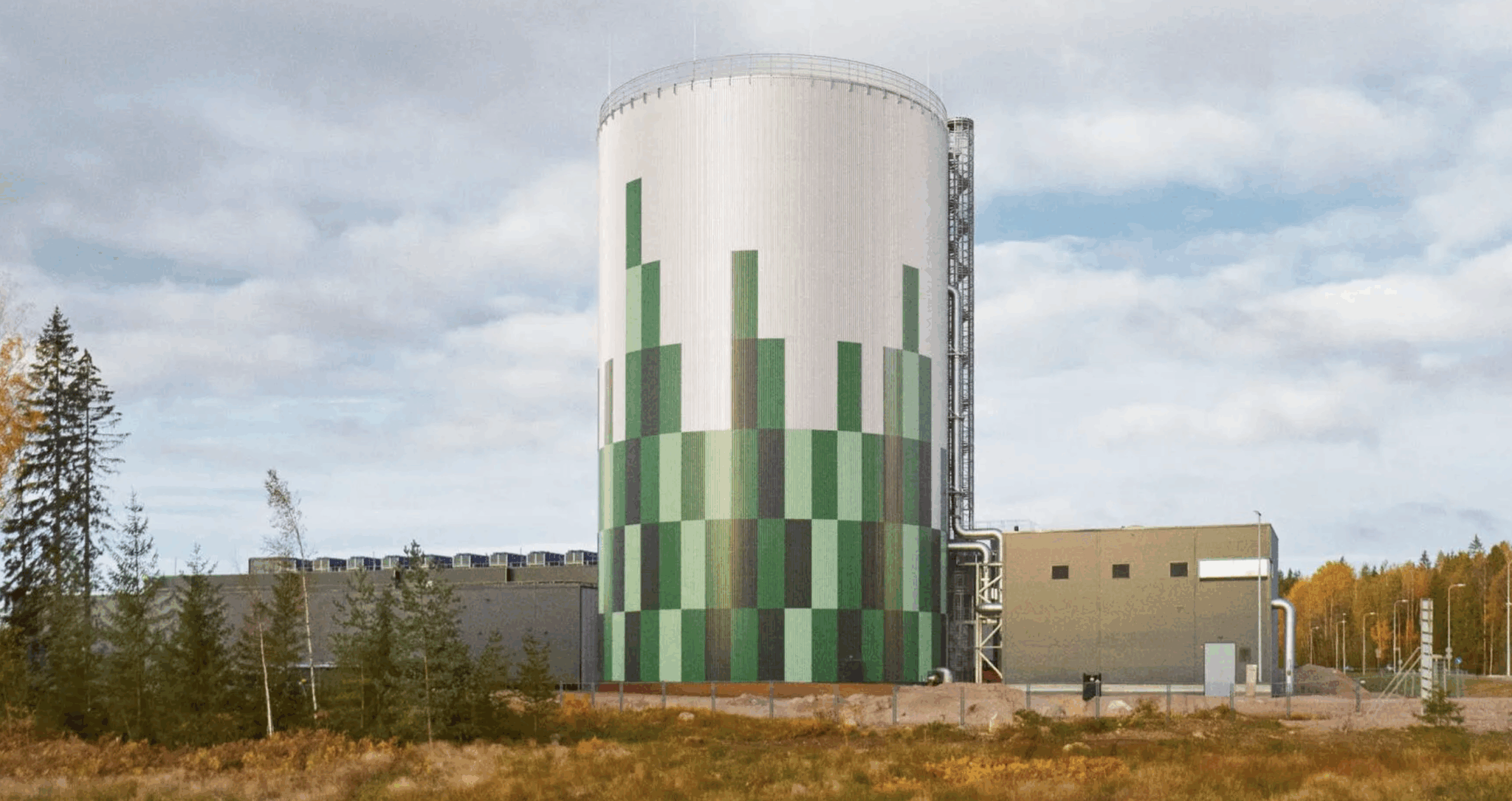
Finnish state-owned energy company Fortum has commenced operations of two large-scale heat pump plants. The plants are located in Kolabacken, within the Kirkkonummi municipality, and Hepokorpi, Espoo municipality, both within the Helsinki Metropolitan Area of southern Finland.
The two plants currently produce district heating via large industrial heat pumps, using ambient air as a heat source, and electric boilers. Details on Fortum’s website says the two plants encompass 40 air-to-water heat pumps, 72 water-to-water heat pumps, producing up to 180 MW of district heating, 200 MW of electric boiler capacity and 800 MWh of thermal storage.
Fortum explains that heat production will increase significantly once the plants begin to utilize excess heat from Microsoft‘s two data centres located on the Kolabacken and Hepokorpi industrial sites, following an agreement between the two companies to implement an excess heat offtaker solution.
A statement from Fortum says that while data centers are essential for digitalisation, they represent a largely unused source of heat. Peter Strannegård, Fortum’s Executive Vice President, Renewables and Decarbonisation, said that once fully implemented, data centre waste heat is expected to cover approximately 40% of the total 2 TWh annual district heating demand of the 250,000 heat users in the area.
The recovery of waste heat from Microsoft’s data centre sites is scheduled to begin step by step next year, Fortum’s update adds, in line with Microsoft’s construction and commissioning schedule.
“As new phases of the data centres are completed, increasing volumes of waste heat will be available for the district heating customers,” the company said. “Waste heat recovery increases local heat production capacity, reduces exposure to fuel price volatility and helps maintain predictable district heating prices.”
Fortum also explained that the set-up of the plants allows heat production to respond flexibly to varying demand, strengthening reliability and price competitiveness of heat production for district heating customers in the area. “For the wider energy system, flexible heat production helps balance electricity demand, particularly during fluctuating renewable generation,” it said.
This content is protected by copyright and may not be reused. If you want to cooperate with us and would like to reuse some of our content, please contact: [email protected].

Please login to comment