




From pv magazine India
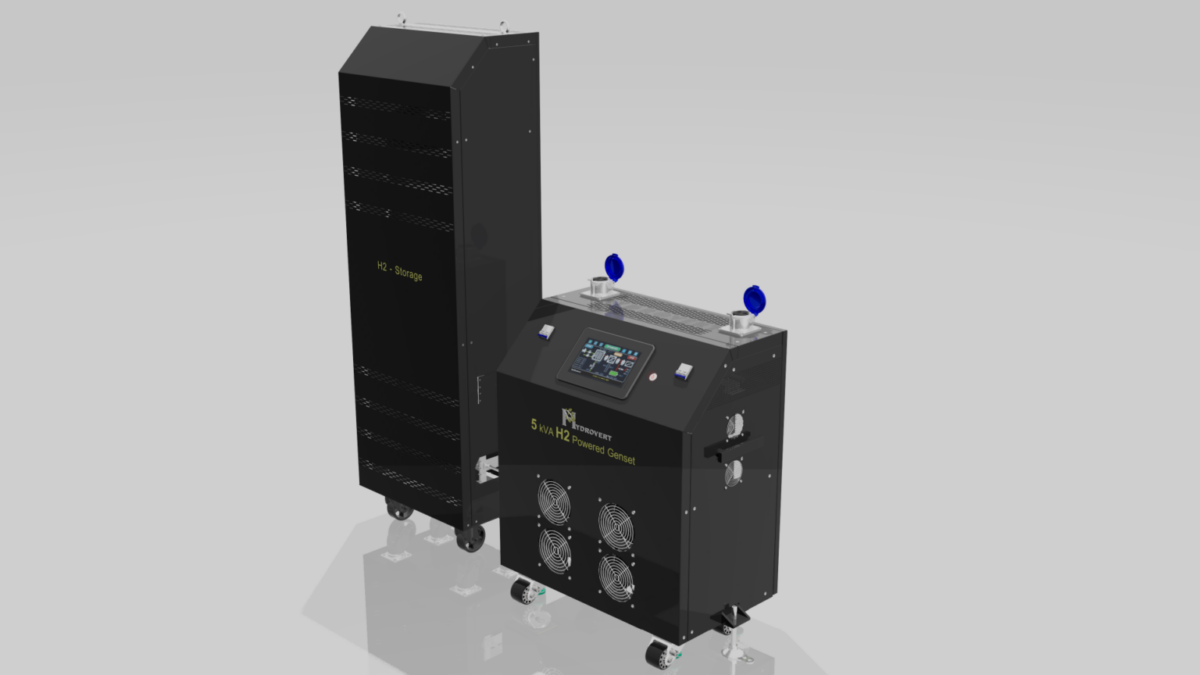
Pune-based startup Hydrovert Energy has developed hydrogen fuel-cell-based stationary power generators with capacities ranging from 5 kVA to 50 kVA for long-duration backup power in commercial and industrial applications.
The company's founder, Supriya Patwardhan, told pv magazine that the systems use hydrogen as the sole fuel input, regardless of whether it is produced from fossil-based pathways, renewable-powered electrolysis, or nuclear energy routes.
The generators combine proton exchange membrane (PEM) fuel cells with battery storage in a hybrid architecture designed to improve efficiency and fuel cell durability while reducing capital costs.
Hydrovert manufactures key components in-house, including fuel cells, battery packs, power electronics, fuel cell controllers and electronic control units (ECUs), with 95% component indigenisation, Patwardhan added.
She said the gensets produce zero emissions and operate without noise pollution, positioning them as an alternative to diesel generators. The systems also generate hot exhaust air at around 45 C, which can be used for indoor space heating in colder climates.
The units include integrated hydrogen leak detection sensors, remote monitoring capabilities, and multiple protection systems, including temperature, overcurrent and short-circuit protection. Users can remotely monitor hydrogen levels, battery status and power generation.
Depending on application requirements, the systems can supply 230 V AC single-phase, 415 V AC three-phase, or 12 V/36 V/48 V DC output.
According to the company, operating costs are lower than diesel- and natural gas-based generators, although capital expenditure remains around six times higher than comparable diesel gensets due to the early stage of the technology. Hydrovert expects costs to decline with manufacturing scale-up and automation.
Indian utility NTPC commissioned the company’s first commercial deployment at a facility in Greater Noida in April 2026.
This content is protected by copyright and may not be reused. If you want to cooperate with us and would like to reuse some of our content, please contact: editors@pv-magazine.com.



By submitting this form you agree to pv magazine using your data for the purposes of publishing your comment.
Your personal data will only be disclosed or otherwise transmitted to third parties for the purposes of spam filtering or if this is necessary for technical maintenance of the website. Any other transfer to third parties will not take place unless this is justified on the basis of applicable data protection regulations or if pv magazine is legally obliged to do so.
You may revoke this consent at any time with effect for the future, in which case your personal data will be deleted immediately. Otherwise, your data will be deleted if pv magazine has processed your request or the purpose of data storage is fulfilled.
Further information on data privacy can be found in our Data Protection Policy.