Emiliano Bellini

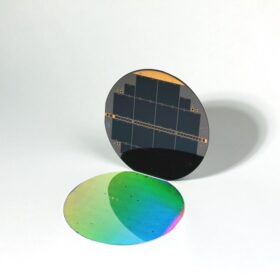
All solar cell efficiencies at a glance – updated
The research group led by Professor Martin Green has published Version 63 of the solar cell efficiency tables. There are six new results reported in the new version.

Nuclear who?
Authors of the “World Nuclear Industry Status Report 2023” define the future role of nuclear energy in the global energy mix as “irrelevant” and “marginal.” The authors add that there were 407 operational reactors producing 365 GW in the middle of the year, which is less than installed capacity predictions for solar by the end of the year.

New air-to-water heat pumps from Italy
Italian manufacturer Thermocold is offering new heat pumps with output ranging from 8 kW to 30 kW. They use propane as the refrigerant and reportedly have a seasonal coefficient of performance of up to 4.5.
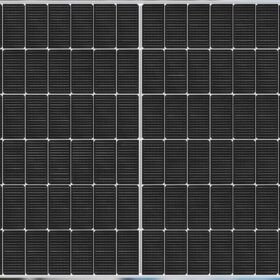
Sharp unveils 575 W TOPCon solar panel with 22.26% efficiency
Sharp’s new IEC61215- and IEC61730-certified solar panels have an operating temperature coefficient of -0.30% per C and a bifaciality factor of over 80%.

E.ON acquires German PV distributor Klarsolar
E.ON has acquired German PV distributor Klarsolar, expanding its network of local businesses offering rooftop PV and residential storage systems. The financial terms of the transaction remain undisclosed.
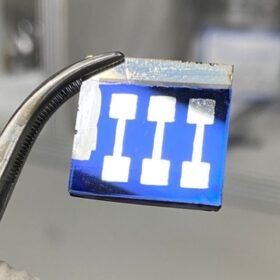
Inverted perovskite-organic tandem solar cell achieves 23.07% efficiency via metal ion-doped absorber
A group of scientists in Korea has a hot-air technique instead of atomic layer deposition to fabricate a perovskite absorber that reportedly shows a higher film quality. They applied this film in a perovskite-organic tandem solar cell, which exhibited low open-circuit voltage losses and high efficiency levels.
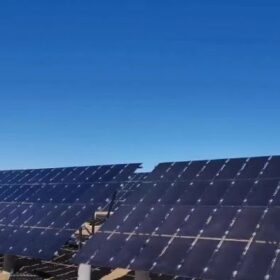
China Three Gorges commissions 1 MW pilot PV plant with perovskite panels
China Three Gorges has commissioned a 1 MW pilot solar plant with perovskite panels near Ordos, in China’s Inner Mongolia region. This marks the world’s first commercial PV system to use perovskite tech and features 11,200 modules from an undisclosed manufacturer.
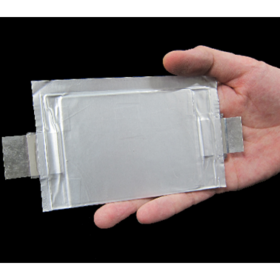
Toshiba develops lithium-ion battery prototype for high-voltage applications
Toshiba has developed a 1.5 Ah lithium-ion battery prototype with a voltage of more than 3 V. The device retains its initial efficiency for over 6,000 charge/discharge cycles and enables rapid charging to 80% of capacity within just five minutes.
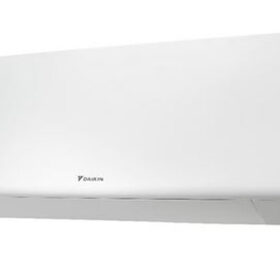
Daikin unveils series of residential air-to-air heat pumps
Daikin has released a line of residential air-to-air heat pumps, using difluoromethane (R32) as the refrigerant, with outdoor unit dimensions of 662 mm x 442 mm x 1022 mm. The output ranges from 2.5 kW to 3.5 kW, and the seasonal coefficient of performance (SCOP) is between 4.85 and 5.17.
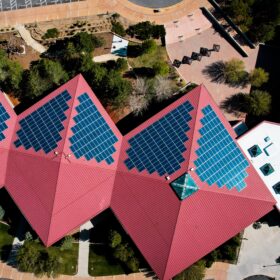
Scientists unveil tool to calculate feed-in, net metering tariffs in residential PV linked to storage
Developed by researchers in China, the novel calculator uses current and voltage sensors, a Raspberry Pi, and an algorithm for fuzzy logic to determine variations in frequency and demand. The tool sends Email notifications with the tariff values to the PV system owners.
