Emiliano Bellini


Fairland launches AI-based residential heat pump with coefficient of performance of 7
The Chinese manufacturer stated that its new heat pump system is the first on the market to achieve a coefficient of performance of 7. The product offers a nominal capacity ranging from 11 kW to 16 kW and uses propane as its refrigerant.

Longi reveals back-contact PV test results from offshore environments
The Chinese manufacturer claims back-contact Hi-MO 9 modules outperformed TOPCon counterparts in a six-month offshore test, showing higher power yield, better low-light performance, and lower operating temperatures.
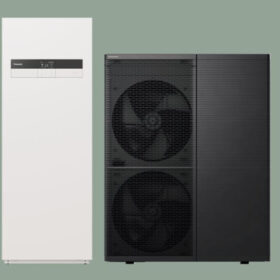
Panasonic unveils new air-to-water heat pump for residential use
The Japanese electronics manufacturer said its new heat pump system is an ideal solution for centralised heating and domestic hot water installations. It offers a heating capacity of 9 kW to 16 kW and a seasonal coefficient of performance of up to 4.31 at low temperatures.

‘Solar modules could be produced in Europe at €0.15/W’
At the Modules and Material Worksop in Konstanz, organized by solar manufacturing engineering company RCT Solutions and ICS Konstanz, experts from the European PV equipment production industry gathered to discuss the current and future trajectory of manufacturing costs, technology advancements and equipment and raw material capabilities. RCT Solutions CEO, Peter Fath, told pv magazine that a European 1 GW module assembly facility using the same supply chain as Chinese Tier 1 counterparts could reach module manufacturing costs of €0.11-0.12/W.
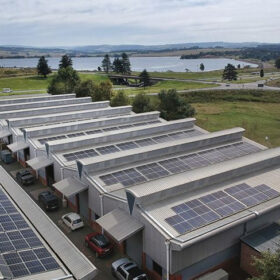
South Africa simplifies registration process for distributed PV
South African utility Eskom is urging consumers with grid-tied rooftop solar to register their systems and integrate them with the national grid, waiving registration fees until March 2026.
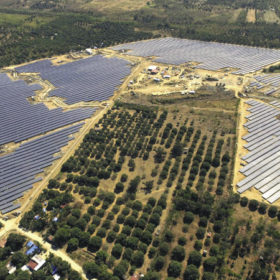
Philippines raises FIT levy for renewable payments
The energy regulator of the Philippines has approved an increase in the feed-in tariff allowance (FIT-All) to PHP 0.2073 ($0.004)/kWh from PHP 0.1189, with the new rate set to take effect next month.

What WTO can still do to regulate global cleantech trade
pv magazine spoke with energy and environmental law expert Anatole Boute about the past and future role of the World Trade Organization (WTO) in regulating trade disputes related to clean energy technologies amid current geopolitical tensions. He noted that despite recent protectionist efforts to revive the solar manufacturing industry, the European Union still strives to remain compliant with WTO rules.

Romania drafts cybersecurity rules for PV, cogeneration up to 1 MW
Romania plans to amend its energy law to require the National Cybersecurity Directorate (DNSC) to define technical standards for PV and cogeneration systems up to 1 MW, aimed at preventing data breaches and safeguarding grid operations.

Deployable tracker-based rooftop PV system for stadiums
An international research team has developed a tracker-based rooftop PV system that can be installed on both new and existing stadiums. The proposed design reportedly allows for easier deployment and delivers higher power output compared to conventional stadium PV covers.

Improving sodium-ion battery stability with calcium
Researchers in Japan have adopted a new calcium-doping strategy to improve the stability and electrochemical properties of NFM, a cathode material used in sodium-ion batteries. The new technique enhances crystallinity and increases the interlayer spacing in NFM, resulting in higher performance compared to NFM treated with conventional processes.
