Luis Ini


Mexico targets up to 9.5 GW of solar and wind by 2030
Mexico’s Secretaría de Energía (Sener) plans to add 6.4 GW to 9.5 GW of renewable capacity while keeping state-owned CFE’s share above 54%, integrating storage and efficiency measures to stabilize the grid.

Iberdrola returns to Mexican solar with 535 MW in new PV projects
Iberdrola is developing two solar plants totaling 535 MW in Coahuila and Guanajuato, signaling renewed interest in Mexico’s energy market.

Costa Rica doubles feed-in rates for new distributed solar producers
Costa Rica’s state utility has approved an average 111% rate increase for new distributed generators under revised eight-year contracts.

Chile loses $562 million to rising solar and wind curtailment
Ember says Chile has curtailed 11,900 GWh of renewable generation since 2022 due to grid congestion, costing operators $562 million.

Colombia creates fast-track licensing for 10 MW to 100 MW solar projects
Colombia has approved a new permitting scheme for solar projects of 10 MW to 100 MW, aiming to cut approval times by up to 70% while tightening social and environmental requirements.
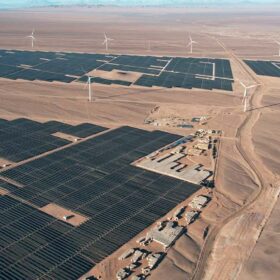
Chile’s energy storage capacity reaches 4.6 GWh
According to data from the Chilean Association of Renewable Energy and Storage (ACERA), the share of non-conventional renewable energy in Chile’s electricity grid rose to 39.5% of total generation in August.
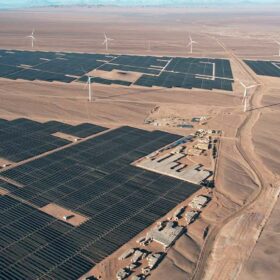
Chile’s PV capacity tops 11.27 GW
Chile reached 11.27 GW of PV in August 2025, with solar accounting for 60% of its renewable capacity.
Mexico launches tender for 300 MW solar plant
Mexican state-owned utility Comisión Federal de Electricidad (CFE) is seeking proposals for the Puerto Peñasco Secuencia III solar plant, which will also include 103 MW of battery capacity.

Colombia to replace subsidies with solar for 1 million low-income households
Colombia will equip more than 1 million low-income households with solar systems to replace subsidies, cut bills and add capacity to the grid.
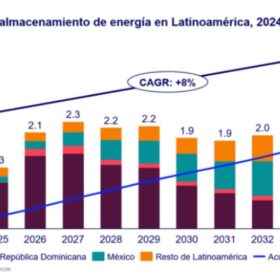
Latin America’s energy storage market set to hit 23 GW by 2034
A new report forecasts that Chile will lead the region in energy storage capacity, followed by Mexico and the Dominican Republic – driven by supportive regulatory frameworks and the growing adoption of hybrid energy projects.
