Patrick Jowett


Saudi Arabia adds around 7.8 GW of solar in 2025
Saudi Arabia had a record year for solar deployment last year, taking cumulative capacity past 12.4 GW. GlobalData is forecasting annual deployments to increase in the coming years but notes that they remain behind the pace required to meet the country’s target of 130 GW of renewables by 2030, instead nearing the goal by 2035.
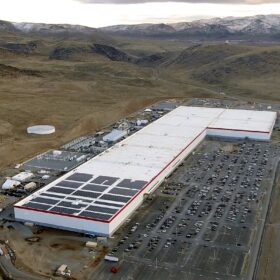
Tesla advances plan to build 100 GW of U.S. PV manufacturing capacity by 2028
Job advertisements on Tesla’s website outline the 100 GW ambition and follow reports the company is in talks with Chinese firms for the purchase of $2.9 billion worth of equipment for solar manufacturing.

Slovakia deploys 243 MW of solar in 2025
Slovakia’s total solar additions last year fall in line with those seen the prior two years, with cumulative capacity now standing in excess of 1.3 GW.
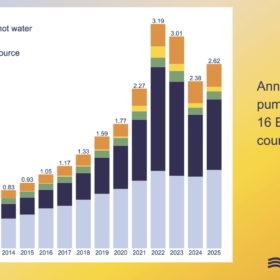
European residential heat pump sales increased in 2025
Analysis across 16 European countries finds an around 240,000 increase in the number of residential heat pump sales year-on-year. The European Heat Pump Association attributes the upward trend to governments stabilizing subsidy schemes.

Ghana plans to procure 200 MW of battery storage
Ghana’s Minister for Energy and Green Transition says the country will advertise competitive bidding processes to deploy 200 MW of battery storage across the country. Ghana’s current installed battery capacity stands at 10 MWh.

Türkiye’s solar capacity surpasses 25 GW
Alparslan Bayraktar, Türkiye’s Minister of Energy and Natural Resources, says 2026 will be a record year for renewables in the country after total deployed solar reached 25,827 MW by the end of January.

Key takeaways from Solar Solutions Amsterdam
The fourteenth edition of Solar Solutions Amsterdam showcased the latest technologies across solar, storage, electric vehicle charging and green HVAC. This year saw energy storage systems dominate the show floor, ahead of the event’s rebrand to Sustainable Solutions Amsterdam from next year onwards, reflecting the Dutch market’s position as a mature market increasingly focused on flexibility and the connectivity of different technologies within a single system.

Pakistan’s solar boom is bigger than official data shows
Pakistan’s Renewables First has explored the implications of a lack of official data collection from the country’s distributed solar market segment, which is estimated to have reached over 24 GW of installed capacity by the middle of last year.

Japan finances 130 MW solar project in Tunisia
The latest round of Japan’s carbon financing program, which provides financial support for low-carbon infrastructure projects in partner countries, is backing a 130 MW solar project being built in southeastern Tunisia.
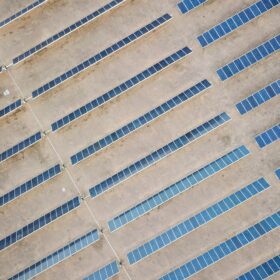
South Africa’s largest PV project reaches financial close
A 620 MW solar project to be constructed in South Africa’s Free State has reached financial close. The milestone follows the signing of a more than 20-year multi-offtaker wheeling agreement with commercial and industrial clients.
