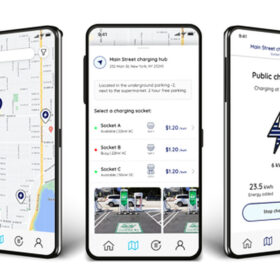
SolarEdge launches solar-optimized EV management platform
SolarEdge’s new software-based solution manages and optimizes the electric-vehicle (EV) charging process for sites that have solar resources and large numbers of EVs requiring dynamic load management.
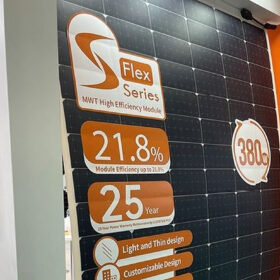
Weekend Read: Flex generation
A new generation of flexible, lightweight modules is entering the market. With back contact technology offering its own form of design flexibility and robustness, the new products could crack a hard-to-address market segment.
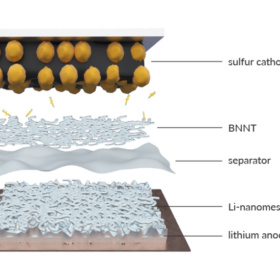
Australian startup reveals 20-layer battery cell based on semi-solid li-sulfur technology
Brisbane-based Li-S Energy has developed a 20-layer battery cell utilizing semi-solid state lithium sulfur battery technology. The company claims the new cell displays nearly double the gravimetric energy density and a comparable volumetric energy density to lithium-ion cells.

Planned US neighborhood is all-electric, solar-powered, storm-resilient
Vermont Governor Phil Scott and Senator Peter Welch attended the groundbreaking for a new microgrid neighborhood in South Burlington, Vermont, that will put solar on every home and an electric-vehicle charger in every garage.

Lithium-iron phosphate prismatic battery cells with energy density of 138 Wh/kg
Chinese energy storage company Imren Battery has introduced its new EVE LF105 lithium-iron phosphate (LFP) prismatic battery cells, which can be used in a wide range of applications, including EVs, renewable energy storage, and other applications.

Rimac Tech enters stationary energy storage with new tech, gigafactory plans
Croatian high-performance EV component supplier and car manufacturer Rimac Technology has developed a novel battery architecture that is said to reduce efficiency losses by up to 50% while decreasing the system footprint by up to 40% compared to current state-of-the-art solutions.
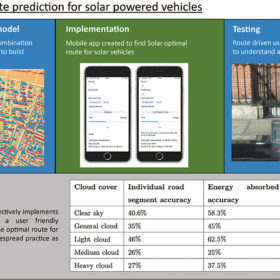
Mobile application to predict optimal energy efficient route for solar vehicles
Irish researchers have created a mobile app that calculates the best route for solar-powered vehicles based on user preferences for time and energy efficiency. The app’s experiment predicted the most energy-absorbing route with 51.65% accuracy and chose the most energy-consuming route with 86.65% accuracy.

Weekend Read: New turf for thin films
Thin-film technologies have long promised to make a major impact on the solar industry but have largely been constrained to niche applications and research labs if they were not shredded by the market. After several false starts, current trade dynamics and promising research programs may help solar thin films find their place in the sun.
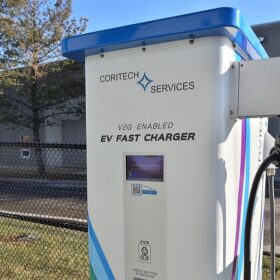
Adaptive control of V2Gs incorporating EV owner expectations
Australian researchers have developed a novel adaptive decentralized control strategy for electric vehicle (EV) integration, incorporating both microgrid and EV-side conditions into the primary frequency control. They have proposed new indices to evaluate the charge and discharge capabilities of EV batteries, as well as the satisfaction levels of EV owners.
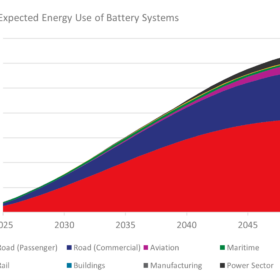
Role of hydrogen, batteries in UK’s decarbonization efforts
Hydrogen and battery technologies are expected to play an increasingly vital role in the UK’s transition to net zero by 2050, but the varying time scales of their rollouts are driving uncertainty in predicted market share profiles over time, according to a new report.
