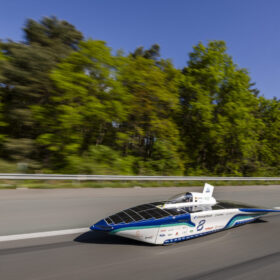
Autonomous photovoltaic vehicle Infinite Apollo validates urban circulation performance
In late April, a 200 km urban road test was conducted in Belgium under real-world traffic conditions and varying levels of solar irradiance to evaluate system performance in complex operational environments. The test serves as the final validation of the vehicle’s systems.
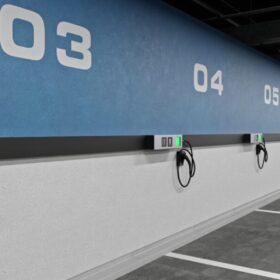
German startup offers scalable AC system for bidirectional charging
Lade GmbH has unveiled an AC system that supports charging at up to 22 kW in both single-phase and three-phase configurations. The hardware is already designed to enable bidirectional charging in large-scale charging parks.
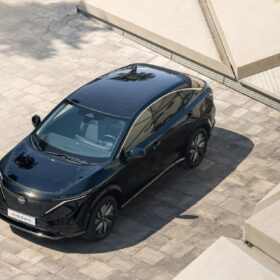
Oxford PV says tandem solar could add up to 5 km to daily EV range
Oxford PV has joined Nissan’s SUITE consortium, advancing perovskite-silicon tandem solar tech that could boost vehicle-integrated solar EV range by an additional 3–5 km per day and push total daily solar driving range toward 15–20 km.

New metric shows renewables are 53% cheaper than nuclear power
A new metric for assessing total system costs puts a least-cost mix of offshore wind and solar at about €46 ($54.20)/MWh in a future climate-neutral energy system for Denmark. Researchers tell pv magazine that figure is less than half the equivalent cost of nuclear under the same conditions.

BMW targets 2028 hydrogen car launch, cites infrastructure and cost hurdles
BMW Group tells pv magazine its iX5 Hydrogen fuel cell electric vehicle (FCEV) will enter series production in 2028 using a third-generation fuel cell system developed with Toyota, but says hydrogen pump prices must reach parity with diesel for the vehicle to succeed commercially.

Sigenergy launches Hong Kong IPO
China’s Sigenergy has announced a Hong Kong initial public offering (IPO), with shares open to retail investors until April 13 and backing from major international asset managers.
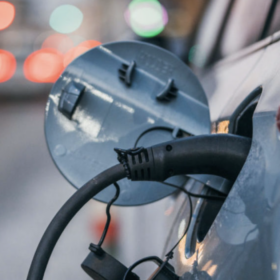
German pilot shows 700 EVs can provide redispatch services
TransnetBW says its pilot with Octopus Energy shows 700 electric vehicles can deliver grid flexibility within existing redispatch processes, with potential to scale to gigawatt-hour levels.

Key takeaways from Solar Solutions Amsterdam
The fourteenth edition of Solar Solutions Amsterdam showcased the latest technologies across solar, storage, electric vehicle charging and green HVAC. This year saw energy storage systems dominate the show floor, ahead of the event’s rebrand to Sustainable Solutions Amsterdam from next year onwards, reflecting the Dutch market’s position as a mature market increasingly focused on flexibility and the connectivity of different technologies within a single system.

Icelandic utility commissions solar-plus-storage for EV charging
Icelandic utility ON Power has deployed a hybrid solar-plus-storage facility in Reykjavík to support electric vehicle charging infrastructure. The company says it believes such distributed systems will play a growing role in charging infrastructure in the future, even in Iceland’s renewables-dominated power system.
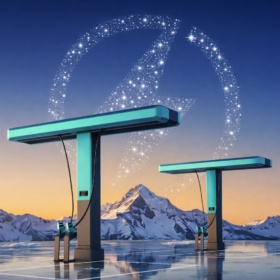
BYD unveils EV batteries that can recharge in 10 minutes
The Chinese electric vehicle maker said the new batteries can charge from 10% to 70% in 5 minutes and from 10% to 97% in 9 minutes. The company also announced a new generation of its Flash Charging Technology.
