
Video: TNO expert discusses outlook for future development of solar vehicles
Bonna Newman, program manager at TNO, speaks to pv magazine about the road forward for vehicle-integrated PV, which will likely remain a niche over the short term, despite recent industrial developments. Several companies have started production, but high-volume output and the potential of other PV technologies beyond crystalline silicon remain key challenges for the future of vehicle-integrated solar.
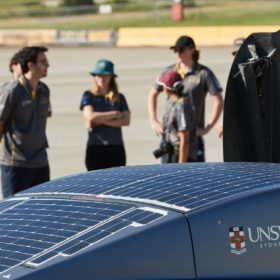
New record for fastest single-charge solar EV over 1,000 km claimed
A solar-powered electric vehicle, designed and built by students of Australia’s University of New South Wales, has claimed a provisional Guinness World Record by going 1,000 km on a single charge in under 12 hours.
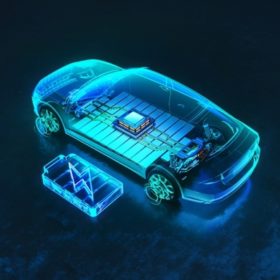
The mobility rEVolution: High-capacity electrode material for solid-state batteries
GoodWe has released a new solar-powered smart EV charger for residential use, Envision AESC has broken ground on a 12 GWh battery plant in the United Kingdom. and PG&E has invited customers to pre-enroll in its three upcoming vehicle-to-everything (V2X) pilot programs.
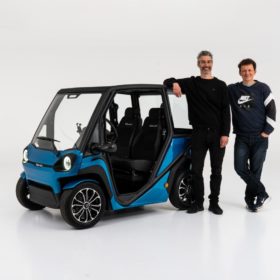
Squad Mobility prices solar car at $6,250
Squad Mobility will start selling its new two-passenger Squad solar electric vehicle in the US market in January. It is designed for quick trips like grocery shopping or short-distance commutes.
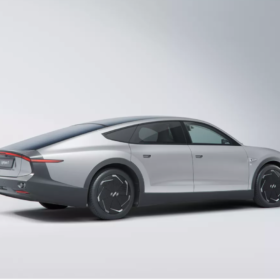
The mobility rEVolution: Lightyear becomes first to launch series production of solar EVs
Acciona Energia is setting up its first V2G network in Spain, ADS-TEC has unveiled a battery-based, all-in-one system with up to 300 kW of charging power, and Volkswagen is looking for a location for its first battery cell factory in North America.
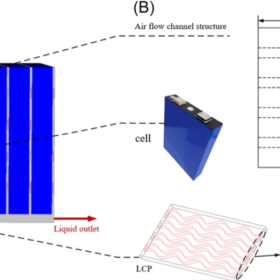
The mobility rEVolution: New cooling system for EV batteries in China
South Korea’s SK is developing battery chargers with integrated battery diagnosis, Australian battery specialist Xelectric Power and Germany’s Mobilespace have launched a truck-mounted battery, and BMW Group has revealed plans to build assembly lines for high-voltage batteries next to its new vehicle plant in Hungary.

The mobility rEVolution: Novel EV charger with solar-matching function
Viridian Solar has released a new 7 kW wall-mounted EV charger, Honda has secured certification to run a virtual power plant in Germany, and Bosch has joined forces with IBM to use quantum computing to conduct research on electromobility materials.
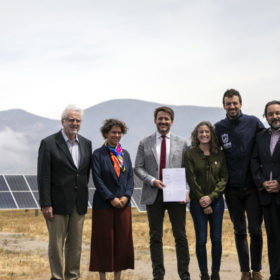
Chile enacts law on energy storage, electromobility
Chile has enacted the Renewable Energy Storage and Electromobility Law, which will compensate standalone storage projects for injecting electricity into the grid and being available at times of peak demand.

The mobility rEVolution: Carmakers set to make more ICE cars than sustainable
Global production of internal combustion engine (ICE) vehicles is on track to far exceed sustainable levels from a climate perspective, according to a new German-Australian study. Foxconn, meanwhile, has started building an EV factory in Thailand.

Weekend read: Solar tops the bill
The US Inflation Reduction Act of 2022 sets aside $369 billion to decarbonize the economy and respond to climate change. pv magazine USA’s Anne Fischer and Ryan Kennedy report on the boost the landmark legislation is expected to provide to solar and battery deployment and manufacturing.
