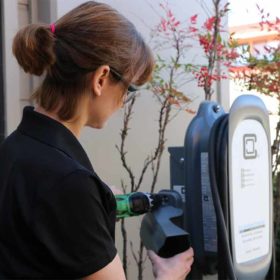
The mobility rEVolution: Enphase Energy to expand EV charger deployments
Enphase Energy’s ClipperCreek unit is set to deploy more EV charging stations in the United States, and Siemens and Mahle have agreed to work on the standardization of wireless EV charging. Mercedes-Benz has expanded its battery supply partnership with CATL, while Tesla has announced that its gigafactory in Shanghai has produced its 1 millionth electric vehicle.
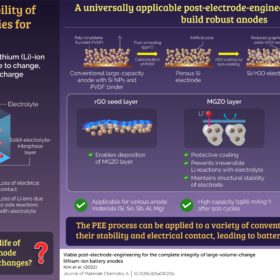
Universal method to improve lifespan of lithium-ion batteries
Researchers at the Gwangju Institute of Science and Technology (GIST) have developed a broadly applicable and versatile post-electrode-engineering process. It can be applied to a range of conventional anodes to improve their stability.
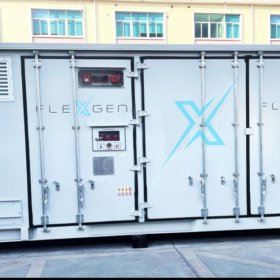
FlexGen launches modular C&I battery
FlexGen, a US-based storage system integrator, has launched a new modular battery solution for the commercial and industrial market. The FlexPod energy storage system combines lithium iron phosphate batteries, a power conversion system, and HVAC in a single container solution, with a range of configurations.

CATL unveils plans for 100 GWh battery plant in Hungary
China’s Contemporary Amperex Technology Co. Ltd. (CATL) has announced plans to invest €7.34 billion ($7.6 billion) to build a 100 GWh battery plant in Debrecen, Hungary. It will be the company’s second battery cell manufacturing facility in Europe.
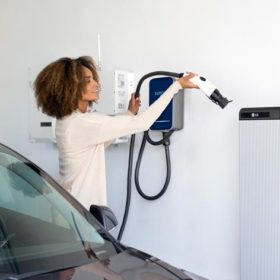
The mobility rEVolution: Sunrun releases Level 2 EV charger
Sunrun has launched its new Level 2 EV charger for residential customers, while BYD has posted its highest monthly electric vehicle sales ever. Nissan, meanwhile, has revealed that it has decided to rent EVs, rather than sell them.

Magnesium superionic conductor for lithium-free solid-state batteries
Scientists in Japan have developed a novel metal-organic, framework-based magnesium ion conductor with superionic conductivity, even at room temperature.
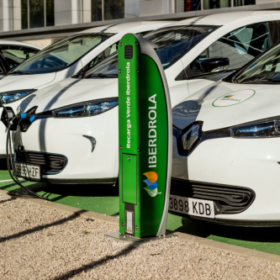
The mobility rEVolution: Iberdrola, bp partner on fast EV charging infrastructure
In other news, QuantumScape announces 24-layer cell and new sampling agreements with car makers, Dutch solar car specialist Lightyear enters into technology sharing partnership with Koenigsegg, and Toyota Motor invests big in EV manufacturing in Indonesia.

Vehicle-integrated photovoltaics for low-speed electric vehicles
Canadian startup Capsolar claims its flexible solar modules can be adapted to any type of low-speed electric vehicle with no extra modification and custom work. The panels have an efficiency of 21.3%.
The mobility rEVolution: Rising gas prices supercharge EV adoption in the US
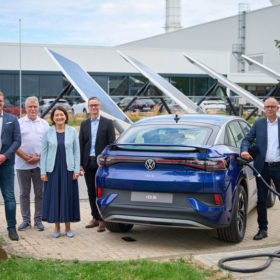
In the US, Volkswagen partners with Tesla cofounder’s company Redwood Materials to recycle EV batteries; in Germany, Volkswagen launches renewables-powered fast-charging EV park with second-life batteries; and Polestar, Mercedes and BMW release fresh sales figures.
The mobility rEVolution: Volkswagen starts building battery cell plant
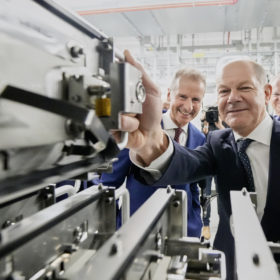
Volkswagen has started constructing its first battery cell factory in Germany, while Northvolt has raised $1.1 billion for a new battery gigafactory. Mercedes-Benz, meanwhile, has agreed to send second-life batteries to Canada for use in stationary storage applications.
