South Africa’s Eskom moves forward with 500 MW BESS initiative
South African utility Eskom has selected contractors for 343 MW of battery storage projects to be deployed in remote locations with limited access to distribution networks, but in proximity to large-scale renewables.
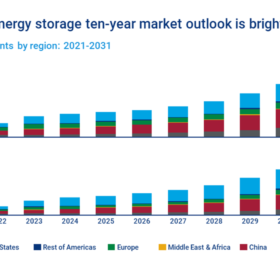
Global energy storage deployment may hit 500 GW by 2031
Wood Mackenzie said it expects the United States and China to represent 75% of global energy storage demand in a highly consolidated market.
Rechargeable silicon redox battery for renewable energy storage
Israeli researchers have developed a device that combines a reversible Si anode with halide cathodes and uses hybrid electrolytes to enable cell recharging. In the proposed system configuration, silicon is dissolved during the battery discharge process, and upon charging, elemental silicon is deposited.
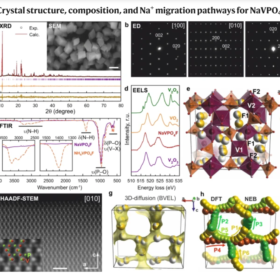
High-voltage sodium-ion batteries with up to 15% higher energy density
Researchers in Russia have developed a new sodium-vanadium phosphate fluoride powder. It has a particular crystal structure that provides superior energy storage capacity in the battery cathode.
The Hydrogen Stream: Fuel cells for backup power
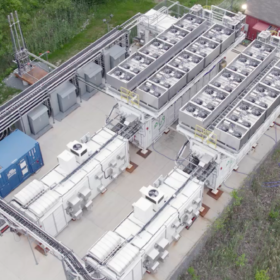
The PEM fuel cell test in New York demonstrated the viability of this technology at 3 MW, the first time at the scale of a backup generator at a data center. Meanwhile, a Spanish-Indian venture will develop up to 300 MW of installed green hydrogen production capacity in the Iberian Peninsula, and a Norwegian-German partnership aims to have a demo track powered by a fuel cell system on the road in mid-2023.
Straight to storage via solar integrated batteries
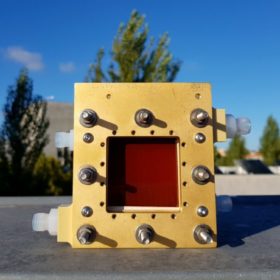
Scientists in China evaluated the prospects for various approaches to integrating both solar generation and energy storage in a single device. Their work outlines several ways this could increase the efficiency of solar energy storage, and recommends that future research on this area should focus on integration of materials with the highest specific capacity for energy storage, alongside the dual function of solar energy harvesting.
Hysata brings capillary-fed eletrolyzer tech closer to commercial production
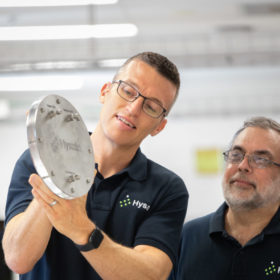
Australian startup Hysata is seeking to commercialize a breakthrough made at the University of Wollongong which CEO Paul Barrett describes as a “brand new category of electrolyzer” with 95% system efficiency.
The role of seasonal demand in an all-electric scenario
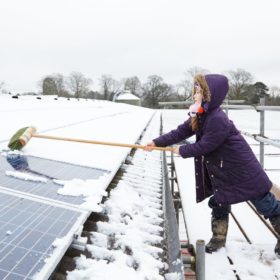
Peak solar production does not coincide with peak heating demand, and a team of researchers determined that meeting this demand with renewables alone will require massive deployment of renewables on top of existing fossil generation.
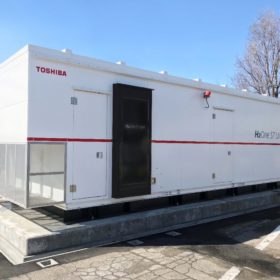
Toshiba energizes PV-powered hydrogen refueling station in Japan
The system is reportedly able to refill about eight hydrogen fuel cell vehicles, each in three minutes. It is also able to supply electric power by using hydrogen produced with renewable energy within the station.

Storing renewables in soil mounds via water balloons
Scientists in Denmark have developed a storage technology that utilizes large underground water balloons and the pressure of the soil to activate a turbine to generate power. They are currently building a first 10 m x 10 m demonstrator to select critical technologies related to the membrane and to the construction of the “movable hill” that will form the terrain part of the battery.
