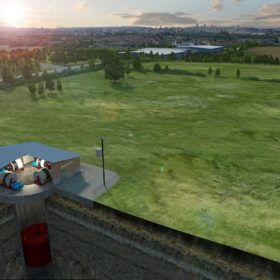
Storing wind and solar with new gravity-based system
Scottish start-up Gravitricity is planning a project to store surplus power from renewables at Port of Leith. A 250 kW, grid-connected prototype facility will have its ability to stabilize the network tested. The system involves a 16m rig over a 150-1500m shaft.
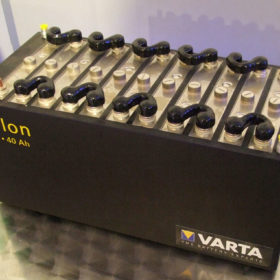
Lithium-ion storage is here to stay
A German-Israeli research group has gathered for three days to discuss which storage technologies may outperform lithium-ion batteries in the future. They concluded that there is no such a thing as a “post Li‐ion” era in sight. They recommended a “side‐by‐side” approach for multiple technologies in different applications, as well as the hybridization of technologies. The group highlighted the strong potential of redox flow storage, which in their view may outperform Li‐ion, although only for stationary applications.

Form Energy claims aqueous air battery provides 150 hours of storage
The holy grail of energy storage has always been low-cost and long-duration. Form Energy intends on deploying a 1 MW/150 MWh system with a Minnesota utility before 2023, an unprecedented energy storage duration if successful.

Uzbekistan pitches for 5 GW of solar by 2030
The country’s previous solar target was 4 GW by 2031. Around 1.4 GW of large scale projects are expected to be tendered this year, according to a document published by the Ministry of Energy.
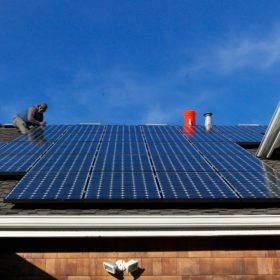
Power-to-heat-to-power storage for rooftop PV
Scientists in Spain have assessed the viability of ‘power-to-heat-to-power storage’ in a residential solar installation in Madrid. The technology could reduce electricity bills by more than 70% and would have a 12 to 15-year payback period, according to the researchers.
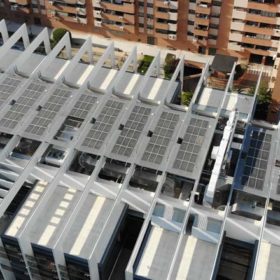
Spanish oil giant pushing community solar
Oil and gas business Repsol has launched Solmatch, the nation’s first large solar community.

SunPower accesses $1bn in residential solar and storage loan capital from credit union
The cash injection from Tech CU will fund the installation of ‘tens of thousands’ of the Californian manufacturer’s solar panels on residential rooftops over four years, according to the company.
A mega solar and wind project for Western Australia
The 15 GW Asian Renewable Energy Hub has been recommended for approval by environmental authorities in the Pilbara region. The project was originally intended to export clean energy to Jakarta and Singapore via subsea, high voltage DC cables but its focus has shifted to domestic industrial consumers.
Storing solar and wind energy with compressed air
Researchers have studied the potential of using compressed air to store renewable energy in offshore saline aquifers. The technology could hold 77-96 TWh for up to two months in British waters, although the costs have proven hard to pin down.

Tackling climate change with machine learning: Covid-19 and the energy transition
The effect the coronavirus pandemic is having on energy systems and environmental policy in Europe was discussed at a recent machine learning and climate change workshop, along with the help artificial intelligence can offer to those planning electricity access in Africa.
