
The weekend read: Building Europe’s battery business
In just three years, Northvolt has progressed from a startup to become Europe’s response to the Asian dominance of global battery manufacturing. pv magazine investigates why Northvolt is setting up units in Sweden, Germany, and Poland, what the firm’s goals are, and how it is attempting to achieve them.
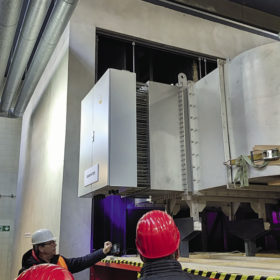
Storage Highlights 2020 – Megawatt Winner: Lumenion
With the new decade, pv magazine brings forth yet another energy storage highlights. Approximately two weeks of work went into sifting through this year’s 22 highlights submissions, conducting research, and preparing them for the jury. Once again, this year’s work was crowned by the moderation of the jury meeting, in which six leading industry experts discussed the technologies and solutions. Differing from previous years, the jurors have selected the top five “Gigawatt” winners, followed by five “Megawatt” winners, and a series of “Finalists” which we are publishing here, leading up to Energy Storage Europe.
Storage prevails in France’s capacity auction
The Ministry for the Ecological and Inclusive Transition’s long-term auction was organized by grid operator RTE under the French capacity procurement mechanism. Storage accounted for 253 MW of the capacity assigned in the auction, which was open to all decarbonizing technologies.

Quebec as a big battery for the northeastern US
Researchers at MIT say the immense hydropower resources of the Canadian province could be used as storage to even out the supply of intermittent renewables generation in New England and New York state.

Storage Highlights 2020 – Megawatt Winner: Ecocoach
With the new decade, pv magazine brings forth yet another energy storage highlights. Approximately two weeks of work went into sifting through this year’s 22 highlights submissions, conducting research, and preparing them for the jury. Once again, this year’s work was crowned by the moderation of the jury meeting, in which six leading industry experts discussed the technologies and solutions. Differing from previous years, the jurors have selected the top five “Gigawatt” winners, followed by five “Megawatt” winners, and a series of “Finalists” which we are publishing here, leading up to Energy Storage Europe.
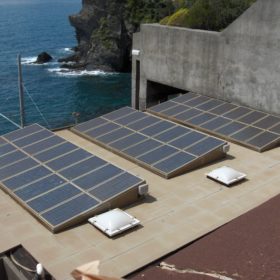
Why go solar? We can think of at least 333 reasons
Australian researchers have compiled data from 173 studies which examined homeowner behavior when buying rooftop PV and identified 333 predictors related to the attitude, knowledge, tendency, awareness, willingness and intent of householders.
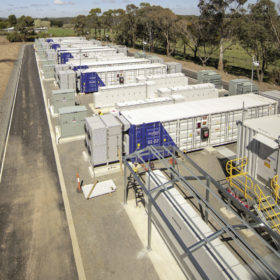
Global energy storage market to surge to 15 GW by 2024
As the sector continues to grow rapidly, delays in manufacturing scale-ups, difficulties sourcing raw materials and a separate path taken by the electric vehicle sector could all chuck ‘sand in the gears’, according to analyst Wood Mackenzie.
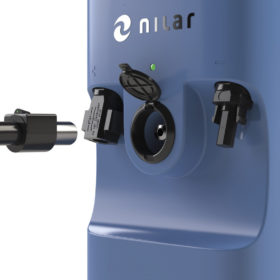
Storage Highlights 2020 – Megawatt Winner: Nilar
With the new decade, pv magazine brings forth yet another energy storage highlights. Approximately two weeks of work went into sifting through this year’s 22 highlights submissions, conducting research, and preparing them for the jury. Once again, this year’s work was crowned by the moderation of the jury meeting, in which six leading industry experts discussed the technologies and solutions. Differing from previous years, the jurors have selected the top five “Gigawatt” winners, followed by five “Megawatt” winners, and a series of “Finalists” which we are publishing here, leading up to Energy Storage Europe.
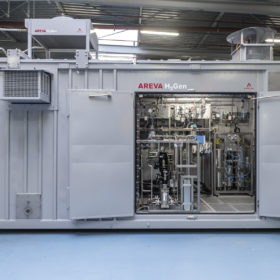
Storage Highlights 2020 – Gigawatt Winner: Areva H2Gen
With the new decade, pv magazine brings forth yet another energy storage highlights. Approximately two weeks of work went into sifting through this year’s 22 highlights submissions, conducting research, and preparing them for the jury. Once again, this year’s work was crowned by the moderation of the jury meeting, in which six leading industry experts discussed the technologies and solutions. Differing from previous years, the jurors have selected the top five “Gigawatt” winners, followed by five “Megawatt” winners, and a series of “Finalists” which will be published in the coming weeks, leading up to Energy Storage Europe.
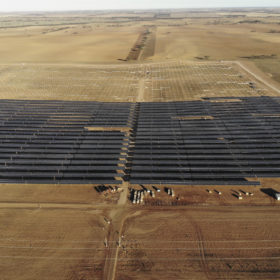
Australian state frees itself from federal shackles to unlock more grid capacity
The government of Victoria has decided to break from national electricity rules and introduce legislation to fast-track priority projects such as grid scale batteries and transmission upgrades, and make room for more large scale solar and wind. The announced reforms have prompted a flurry of reaction.
