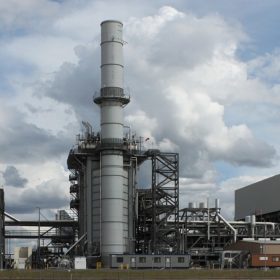
Polish gas plans could leave taxpayers needing to find billions
With the Polish government planning to commission five gas power plants over the next five years, London-based thinktank Carbon Tracker has estimated just how costly the move will be, compared to deploying solar plants and energy storage instead.
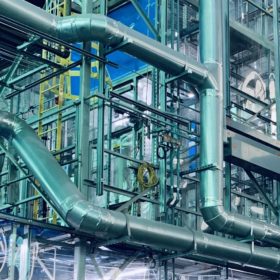
Water-based electrolyzer for green hydrogen production
Verdagy has secured a $25 million investment for its new electrolyzer technology, which provides hydrogen fuel for heavy industrial applications. The membrane-based technology uses large active area cells, high current densities, and broad operating ranges to deliver hydrogen at scale.
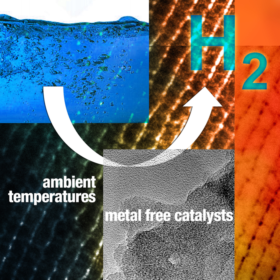
The Hydrogen Stream: New dehydrogenation process to improve hydrogen storage
The U.S. Department of Energy’s Ames Laboratory launched a new catalyst based on nitrogen and carbon to extract hydrogen from hydrogen storage materials at mild temperatures and under normal atmospheric conditions. Furthermore, South African President Cyril Ramaphosa said that the country is working on attracting new investments in electric vehicles and hydrogen and Norwegian consultancy and classification society DNV launched, together with 18 industry partners, a new Joint Industry Project (JIP) to enhance the standardization for hydrogen production systems that use renewable energy-powered electrolysis to produce green hydrogen.
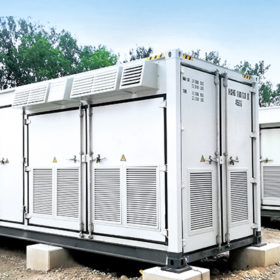
Italy’s third Capacity Market auction expected to open new opportunities for large-scale storage
The retirement of coal baseload capacity, some regulatory adjustments and high energy prices volatility could bode well for the deployment of batteries in Italy, and especially in Sicily. Problems, mostly related to the timing and the structure of the auction, remain, however. We spoke about it with Michele Scolaro, Aurora Energy Research Associate.
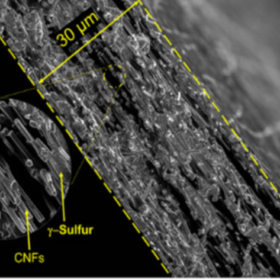
A 4,000 cycle lithium-sulfur battery
Scientists in the United States developed a lithium-sulfur battery using a commercially available carbonate electrolyte, that retained more than 80% of its initial capacity after 4000 cycles. The group used a vapor deposition process which unexpectedly produced a form of sulfur that did not react with the electrolyte, overcoming one of the key challenges for this battery chemistry.
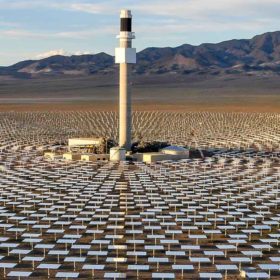
Next-gen concentrated solar power now under development
In new studies led by researchers from the National Renewable Energy Laboratory, the US Department of Energy pursues an energy cost goal of $0.05 per kilowatt-hour.
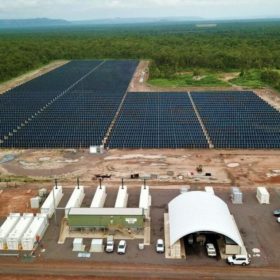
Solar-plus-storage powers Australian mining town
The remote Australian township of Jabiru, deep in the heart of Kakadu National Park, has been powered 100% by solar PV during the final commissioning of the new Jabiru Hybrid Renewable Power Station.
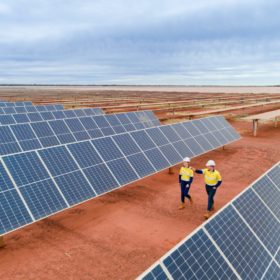
Fortescue unveils plans for 5.4 GW project in Australia
Fortescue Metals Group has unveiled plans for a massive 5.4 GW solar PV, wind and battery storage project at its iron ore mining operations in Western Australia.
Zinc batteries: Old technology brings new values
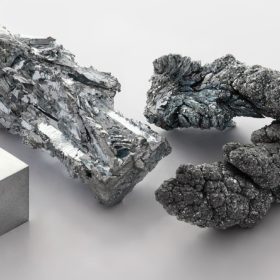
In battery storage, there is no silver bullet chemistry type and as we move towards more ambitious decarbonization goals, room is being made for diverse systems. As an old technology with new vitality, zinc-based batteries are edging closer to commercialization, leveraging their unique ability to be configured for short and long duration operation. They are safer, longer lasting and, in some cases, reportedly up to 50% cheaper than lithium-ion batteries and, following recent game-changing advances, the prospects for zinc look much more exciting. pv magazine sat down with the manager of the newly established, global Zinc Battery Initiative, Josef Daniel-Ivad, to discuss the technology’s market position and developments.
Large scale alkaline electrolyzers may be built at €444/kW in 2030
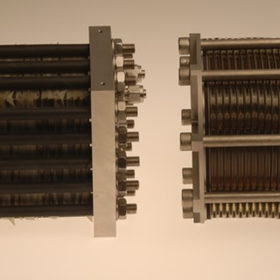
Researchers at Germany’s Fraunhofer ISE have estimated the costs for both alkaline (AEL) and proton exchange membrane (PEM) electrolyzers and have found that AEL systems have bigger margins for cost reduction. According to their calculations, the costs of a large scale AEL electrolyzer with a capacity of 100MW should drop from €663/kW in 2020 to €444 in 2030.
