
Shell buys US solar and storage company Savion
The transaction, for which Shell did not reveal the purchase price, will see the energy company pick up a U.S. project development pipeline which reportedly runs to more than 18 GW of solar generation and energy storage capacity across 26 states.
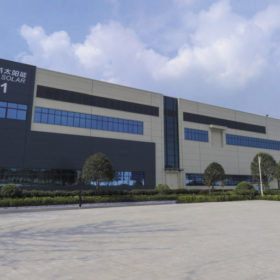
Chinese PV Industry Brief: A 20 GW wafer factory under construction and more polysilicon capacity
Fuxing New Energy is building a wafer factory in Anhui Province and Tongwei is moving forward with its plan to increase polysilicon capacity to 430,000 metric tons by the end of 2023.

UK launches new auction for large scale renewables, solar included for first time since 2015
The fourth round of the Contracts for Difference (CfD) scheme is expected to allocate 12 GW of renewable energy capacity. Solar and on-shore wind, which the British government considers well-established technologies, are entitled to secure up to 5 GW, but the limited budget these two technologies have been awarded may not be enough to reach this level.
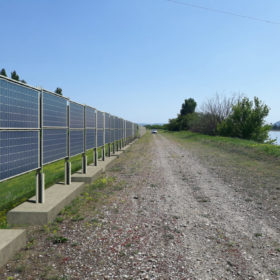
France’s first vertical bifacial solar power plant
French energy company Compagnie Nationale du Rhône is considering deploying vertical PV installations along 400 km of its dikes. A first 104 kW project was deployed at the Sablons dike, in the Isere department.
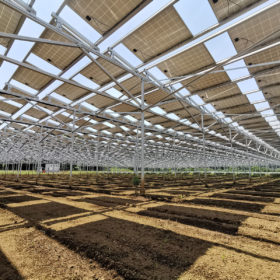
Japan releases new guidelines for agrivoltaics as installations hit 200 MW
The Japanese authorities have released new guidelines for the development of agrivoltaics projects and have excluded installations that do not host crops or livestock in the planning phase. Analyst Takeshi Magami says that agrivoltaics can be developed under the feed-in tariff scheme, in the free market via PPAs, or through a rebate scheme covering 50% of initial investments.
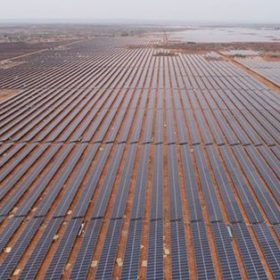
India hits 46.2 GW of installed PV capacity
India recorded 46.2 GW of installed solar capacity at the end of October, led by installations in the states of Rajasthan, Karnataka, and Gujarat.
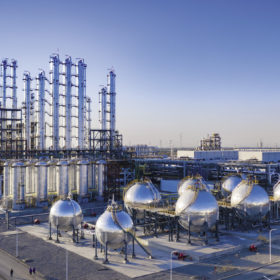
The weekend read: Solar PV development disrupted
It may be the best of times, or it’s the worst – it rather depends on who you talk to. Either way, 2021 has not been a dull year in the global solar industry. Polysilicon and commodities prices, shipping costs, tariffs, and energy shortages have all taken turns to give the supply chain a beating, but has it sent PV development off course?
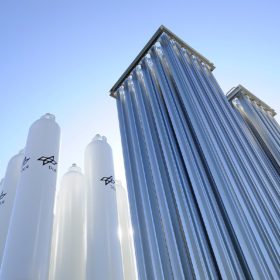
The Hydrogen Stream: Electrolyzer ramping from 0 to 50,000 amperes in less than 10 seconds
Developed by Canada-based Hydrogen Optimized, the electrolyzer can be used to stabilize electrical grids and optimize energy recovery from intermittent renewable power sources such as solar and wind. Furthermore, this week four more big international partnerships for developing green hydrogen were announced across Germany, the Middle East, and Australia.

U.S. Trade Commission recommends extension of Section 201 solar tariffs
SEIA responds that a new round of tariffs will hamper U.S. solar development and forestall this administration’s vision of becoming a world leader in clean energy.
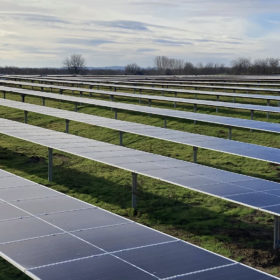
Utility scale solar goes merchant in Hungary
Photon Energy has deployed its first merchant PV project in Hungary. The company said the €1 million plant may be the first in a series selling power to the spot market. In an interview with pv magazine, Hungarian renewable energy specialist, Ferenc Kis, stated that these projects may become more frequent in the future, due to new coordinated grid connection capacity allocation.
