
The weekend read: Stepping up storage in the US
The U.S. storage market is booming. But while the solar PV industry has come a long way, with decades of deployment to look back on, battery energy storage is still coming of age. And when things move fast, things can go wrong. At pv magazine’s Virtual Roundtables USA event in late-November 2020, experts raised the challenges that accompany opportunities for battery storage. A move toward greater maturity allows some lessons to be learned from solar – leveling up energy storage will require commitment from the sector with standards, testing, and quality performance.
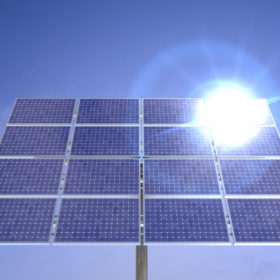
Chinese PV Industry Brief: China could add 65 GW of solar this year as Longi order gives GCL-Poly a much-needed lift
State-owned power company SPIC is all set to contribute to the figures after announcing it wants to add 15 GW of renewables capacity during 2021 and China Glass, fresh from rebuffing Xinyi Glass’ takeover offer, is on the hunt for more manufacturing facilities.
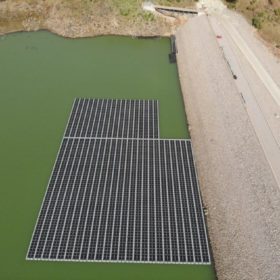
The untapped potential of floating PV in Africa
Researchers at the European Commission’s Joint Research Center have assessed the potential of installing floating solar plants on 146 hydropower reservoirs in Africa. They concluded that, in addition to increasing installed capacity, the plants also reduce water evaporation, allowing for increased annual hydropower production.
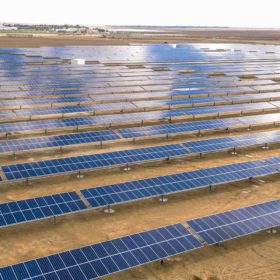
Five commercial offtakers for $33m Jordanian solar portfolio
Telecomms, retail and garment manufacturing businesses have signed up to consume the electricity to be generated by eight solar projects in Jordan which will harness grid infrastructure to transfer an estimated 81 GWh of clean power annually.
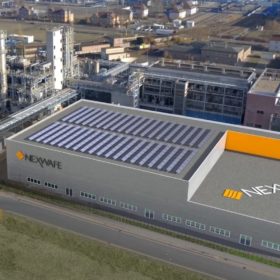
Nexwafe raises €10 million for commercialization of wafer tech
Wafer manufacturer Nexwafe is currently trying to commercialize its highly efficient monocrystalline wafer technology.
Blockchain-enabled retail PPAs in Australia
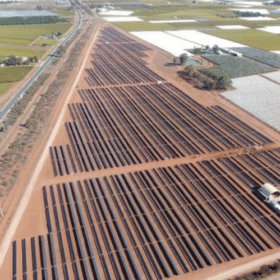
WePower has delivered its blockchain-enabled Elemental technology to Mojo Power to set up the Mojo Marketplace, an online market for renewable-energy retail contracts.
India’s 6.4 GW solar auction concludes with final price of $0.034/kWh
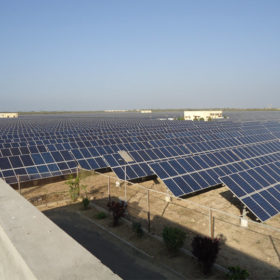
The Andhra Pradesh solar auction was oversubscribed by 8.5 GW. Final prices are significantly higher than the record-low tariffs achieved in other recent auctions in the country.

Russia to tender 500 MW of solar in 2021
The country’s cumulative installed PV capacity reached 1.7 GW at the end of 2019, as a result of the grid-connected projects tendered by the Russian government between 2014 and 2019. The remaining 500 MW quota of the 2.2 GW tendering scheme should be assigned this year.

Novel catalyst produces green hydrogen from seawater via solar
Australian and Chinese researchers have developed a novel catalyst for the production of green hydrogen from seawater via solar.
Key challenges for underground hydrogen storage
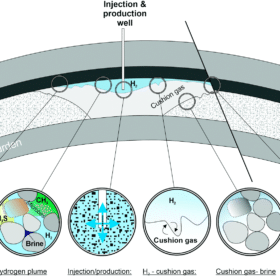
An international research team has presented challenges and knowledge gaps in the implementation of large scale underground storage of hydrogen. The main issues associated with this technology relate to the fluid flow behavior of hydrogen in subsurface reservoirs, geochemical reactions caused by hydrogen injection, biotic reactions caused by excess hydrogen, and the geomechanical response of the subsurface to hydrogen storage.
