
The weekend read: Out with the old…
PV demand started weakly this year but will show an upward trend in the second half. Corrine Lin, chief analyst at PV InfoLink, examines supply and demand for polysilicon and predicts huge new capacities will come online in the west of China and shake up the market, spelling bad news for some international players.
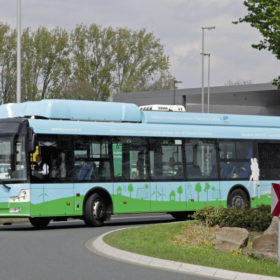
Swedish researchers develop ultra-fast hydrogen leak detector
The discovery could provide a great leap forward in the feasibility of using hydrogen-powered cars to curb global transport emissions.

Developer Avaada raises $145m to fund 2.4 GW of Asian and African solar
Indian developer Avaada Energy has raised the funds from the Asian Development Bank and European development institutions. The PV business will finance 2.4 GW of the 5 GW of solar capacity it hopes to secure over the next two years.
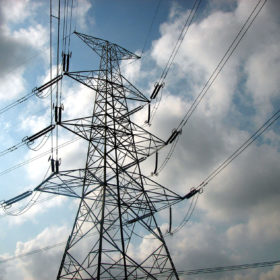
China offers insight into transition to subsidy-free solar
The emphasis on grid-parity PV has been highlighted in a consultation document that has emerged after several weeks of haggling in Beijing. Chinese analyst AECEA says the success of any subsidy-free effort would hinge on the ability of power companies to transmit and guarantee consumption of power generated by new projects.

Hanergy plans to roll out industrial park development outside China
The Chinese thin film giant has transformed itself into a solar manufacturing equipment supplier and is set to expand a strategy which sees affiliates help fund industrial parks which then generate orders for its thin film production lines.
Solar investment mostly up on venture capital and debt as money pours into large scale projects
Mercom Capital Group’s Q1 2019 Solar Funding & M&A report has registered $2.8 billion in venture capital, public market and debt financing, up from $2.5 billion a year ago. Large scale project financing reached a record $5.58 billion across 43 deals and there were 18 solar corporate M&A transactions.
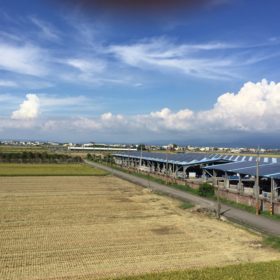
Taiwan becomes a GW solar market
TrendForce says the country deployed more than 1 GW of new PV for the first time last year, and predicts this year may see as much as 1.5 GW of new solar capacity. The nation’s cumulative capacity reached 2,618 MW at the end of last year, according to the International Renewable Energy Agency.
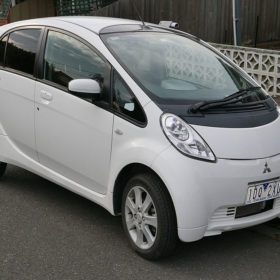
Mitsubishi offers residential solar-plus-storage EV charging in Japan and Europe
The Dendo Drive House includes a solar system, residential storage and a bi-directional charger. Mitsubishi says it reduces electric bills and fuel costs by enabling battery charging from the grid at night, when power prices are cheaper, and can also draw power from an electric vehicle.

Inverter maker offered customer €50 for replacement product which would have carried ‘thousands of euros’ of associated costs
Often, it is not inverter faults that frustrate customers – such things happen – it is poor customer service. Here we look at the first of a series of cases that will be discussed at the pv magazine quality roundtable planned for Intersolar Europe, in Munich, which indicates what the industry must avoid in future.
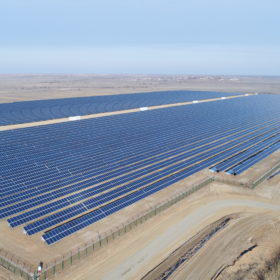
Global solar may reach 8,500 GW by 2050 – IRENA
Solar and wind could account for three-fifths of electricity generation in 2050, with more than 14.5 TW of installed power. Lumped together, renewables are expected to reach a power generation capacity of around 20 TW.
