
The Hydrogen Stream: BNEF forecasts sharper green H2 price drop by 2050
BloombergNEF says green hydrogen will fall from a current range of $3.74/kg to $11.70/kg to between $1.60/kg and $5.09/kg by 2050, while Longi Hydrogen has secured a conditional $6.14 million equity investment and cooperation agreement with HydrogenPro.
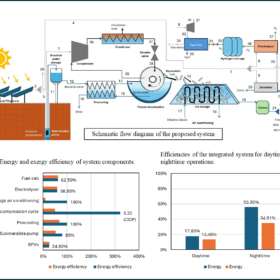
The Hydrogen Stream: Qatari researchers unveil PV-led desert agriculture system
Researchers in Qatar have proposed a solar-powered freeze desalination and electrolysis system for freshwater and green hydrogen production, while BP says it has made a final investment decision for its 100 MW Lingen Green Hydrogen project in Germany.
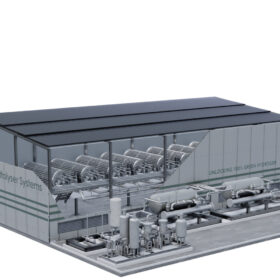
BLS plans 1 GW fab to make battery-powered electrolyzers
Battolyser Systems’ (BLS) product is a patented dual-purpose electrolyzer with a battery function.
The Hydrogen Stream: US will focus on blue H2, at least one giga-scale green project will take FID in 2025
Wood Mackenzie says the United States will dominate the blue hydrogen market by 2025, driven by policy shifts and large-scale investments, while Siemens Mobility says it has secured approval for its Mireo Plus H hydrogen trains to begin passenger service in Germany.
The Hydrogen Stream: IGI Poseidon, Corinth Pipeworks test H2 transport pipes
IGI Poseidon has partnered with Corinth Pipeworks to test carbon-steel pipes for hydrogen transport under high pressure, while Axpo has begun building a green hydrogen plant in Switzerland to fuel vessels and other applications from 2026.
The Hydrogen Stream: Optimal PV-to-electrolyzer ratio in Italy is 1.8-2.1
Italian researchers say hydrogen storage offers more supply-side flexibility than battery storage, while a German consortium has developed a global hydrogen potential atlas for sustainable production and trade.

UK commits to hydrogen-to-power subsidy mechanism
The UK government announced a new business model for hydrogen, based on dispatchable power agreements available to carbon capture technologies.
The Hydrogen Stream: US government, ABI Research predict lower H2 costs
The US government says electrolysis could reduce clean-hydrogen production costs to $1/kg by 2031, while ABI Research claims the global levelized cost of hydrogen (LCOH) will become cost-competitive by the end of this decade, dropping to $2.50/kg.
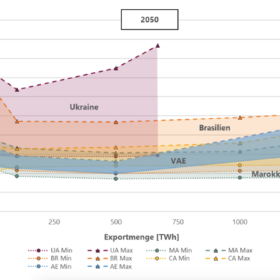
Global hydrogen atlas shows potential import countries for Germany
Researchers from the Fraunhofer Institute for Solar Energy Systems have analyzed the techno-economic potential of importing hydrogen to Germany from Brazil, Morocco, Canada, Ukraine and the United Arab Emirates.
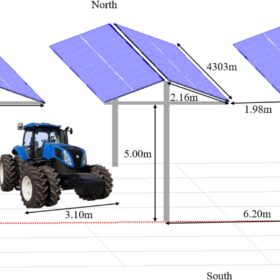
How to combine off-grid agrivoltaics with large-scale hydrogen production
Scientists in the United Kingdom have simulated how a 1 GW off-grid agrivoltaic facility may be used to fuel hydrogen fuel electric cell vehicles across Australia, California, China, Nigeria, and Spain. Their techno-economic analysis showed that the proposed combination could provide a levelized cost of hydrogen ranging from $3.90/kg to $8.13/kg.
