
Fortescue continues US expansion with new clean energy manufacturing plant
Australian mining and green energy major Fortescue has revealed plans to establish a new clean energy technology manufacturing plant in the United States, as it looks to take advantage of the US Inflation Reduction Act (IRA).

The Hydrogen Stream: German hydrogen collaboration strategy takes shape
Dutch company Gasunie will collaborate with two German transmission system operators (TSOs) and one Danish TSO to import green hydrogen from the Netherlands and Denmark. Meanwhile, French independent power producer (IPP) HDF Energy commits to co-develop project in Morocco, and two Japanese companies move ahead with hydrogen production plant in Malaysia.
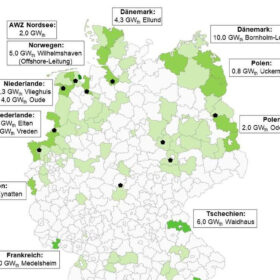
The Hydrogen Stream: FNB Gas presents hydrogen network plan for Germany
FNB Gas has unveiled plans for a hydrogen core network in Germany, while Tree Energy Solutions has started working on an electrolyzer and 1 GW of renewable energy assets in Canada.
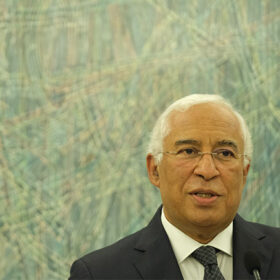
Transcription mistake led to Portugal prime minister’s resignation
Portugal’s Prosecutor’s General Office (PGO) reportedly confused the then-Prime Minister’s name, Antonio Costa, with that of the Minister of Economy, António Costa Silva, in a corruption investigation. The transcription incorrectly implicated the Prime Minister’s involvement.
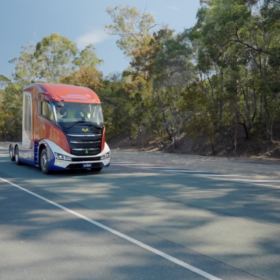
Pure Hydrogen launches Taurus hydrogen fuel cell truck in Australia
Australia’s Pure Hydrogen says that its Taurus hydrogen fuel cell prime mover is now available for sale.
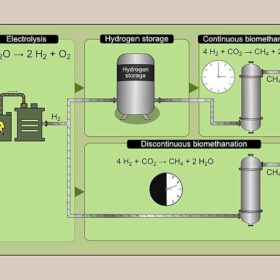
Photovoltaics for biomethanation
Researchers in Denmark have studied the technical and economic feasibility of biomethanation through large-scale PV power generation. They said that the intermittent PV-driven biomethanation process matches the efficiency of continuous processes after several days.
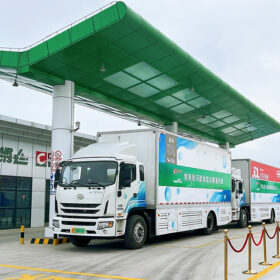
The Hydrogen Stream: Plug Power shares fall on North America concerns
Plug Power has issued a warning about its 2023 financial performance due to supply challenges in North America, while Air Products says it is cementing its collaboration with Chengzhi in China.
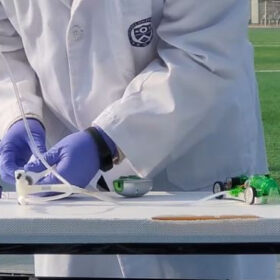
Algae photovoltaics for hydrogen production
South Korea researchers have developed a cell by merging green algae with carbon nanofibers, in order to generate 9.5 W per cell and achieve a peak efficiency of 0.9%. They claim this is enough to power a micro-generation system for hydrogen production.
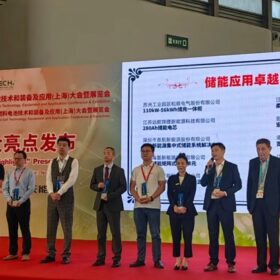
Key takeaways from China’s SNEC Energy Storage & H2 tradeshow
The latest edition of China’s SNEC Energy Storage & H2 event showed an impressive range of new products and technology. pv magazine was there to check out the most interesting solutions.
PV, storage may allow 53% of European households to end reliance on grid
A German-Swiss research team has calculated how many homes in Europe could be decoupled from external infrastructure with solar power, batteries, and hydrogen storage.
