
Colored modules for building-integrated photovoltaics
Taking inspiration from the 3D photonic structures on a Morpho butterfly’s shimmering blue wings, scientists at Germany’s Fraunhofer Institute for Solar Energy Systems ISE have developed colored solar panels that can be incorporated into a building’s exterior practically invisibly while maintaining high efficiency.
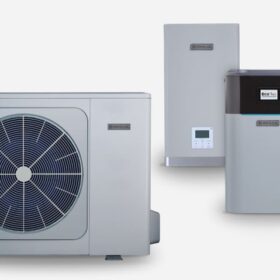
Weil-McLain launches dual-fuel heat pumps for residential, light commercial applications
The US-based heating specialist said its new air-to-water heat pumps use difluoromethane as the refrigerant and have a coefficient of performance of up to 5.37.
California bill introduced to mandate a VPP implementation plan
Virtual power plants, which could save state ratepayers an estimated $550 million per year, are connected aggregations of distributed energy resources like rooftop solar and energy storage.
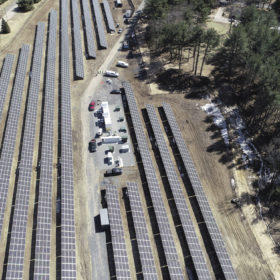
California off to a strong clean electricity start with solar up 33.8%
Forty-eight days into 2025, CAISO gas use for electricity is down almost 28%, while battery use is up 78%, and solar has already met 100% of demand in the midst of winter.

Persistent cloud drops British Isles solar output in early February
In a new weekly update for pv magazine, Solcast, a DNV company, reports that cloud-bearing weather systems dominated the British Isles, significantly reducing irradiance across the UK and Ireland between 9 and 18 February 2025, when solar generation reached in the region its lowest levels relative to capacity in at least a decade.

US added nearly 50 GW of new solar generating capacity in 2024
A new report by the Business Council for Sustainable Energy and BloombergNEF unpacks the market and policy trends facing the U.S. solar industry.
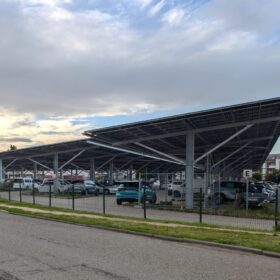
France launches 400 MW C&I solar tender
The French authorities intend to allocate 400 MW of PV capacity through the procurement exercise, which is open to PV installations exceeding 500 kW in size.
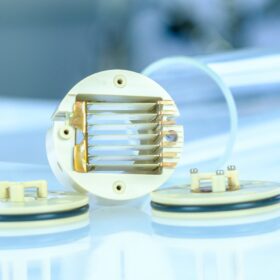
Fraunhofer institutes developing electrocaloric solid-state heat pump without compressors
Six Fraunhofer institutes are developing new electrocaloric heat pumps that use elastocaloric heat pipes instead of compressors to extract heat from the sources. The first pilot systems developed by the research team achieved an electrical efficiency of 99.74%.
New research shows correlation between PV module electrode corrosion and damp heat test
A research group in Japan identified a correlation between damp heat test of 1,000 hours to 3–6 years of field exposure in humid areas and changes in acetic acid concentration in photovoltaic modules. Their analysis also showed that an acetic acid concentration over 10,000 μg/g can be critical.
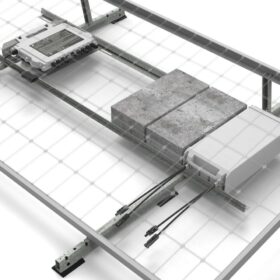
Yotta Energy replaces ballast blocks with battery storage
The energy storage startup’s new plug-and-play modules will provide a kilowatt of storage in a small package.
