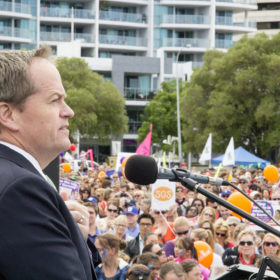
Australian opposition unveils “clean energy powerhouse” policies for 2019 election campaign
Federal Labor leader Bill Shorten announced the party’s ‘all of the above’ plan for Australia’s energy sector. A ramped-up National Energy Guarantee, project auctions under a CfD structure, grid infrastructure investment, energy efficiency and a boost to battery storage all feature.
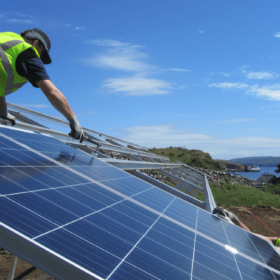
Islands ditching diesel in favor of renewables
The U.K. is helping islands in Scotland and the Caribbean, Pacific and Indian oceans, make the switch from dirty diesel generators to renewables. In the former, community-owned renewable systems are ensuring 24 hour energy supply, while in the latter, a new renewable energy analytics platform is set to help identify the optimum energy mix for six islands.
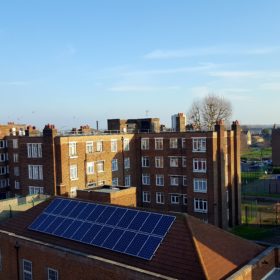
Centrica to join London blockchain trial for alternative billing
Using a blockchain-based energy trading system, the company seeks to examine ways to bill customers in the best manner for them and prosumers. In light of the potential removal of export tariffs for small scale solar in the UK, the system could provide alternative remuneration for system owners. The trial will run for six months, with the possibility of extending it to two years.
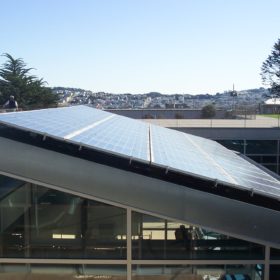
Dutch government sets up €100 million fund for PV in schools
The scheme would provide low interest loans to Dutch schools willing to go solar. Some 6,000 of the country’s 7,000 school buildings have yet to install an array.
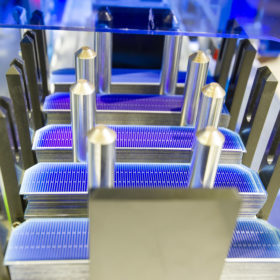
Solar sector to add 552 GW by 2027 led by China
The leading trio – China, the United States and India – will comprise 70% of the projected 552 GW of solar capacity, which will be added between end-2017 and 2027, finds Fitch Solutions, which has revised down its original forecast for solar capacity growth in China. The curbed growth in China, due to subsidy cuts and restricted access to the United States and India, is expected to squeeze domestic solar equipment manufacturers, but also lead to access to cheaper solar panels in other smaller markets.
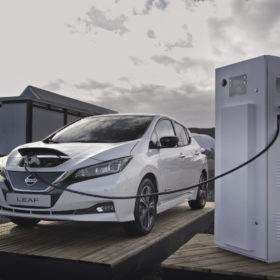
What’s in store for storage? $620bn
The rise of batteries will attract that headline figure in investment up to 2040, say analysts, as exponential growth in EV ownership, falling stationery system costs and the needs of the world’s grid-poor regions combine to boost lithium-ion technology.
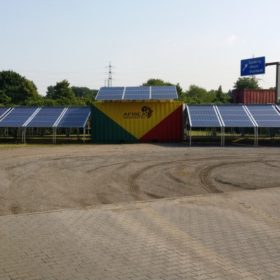
‘Renewables mini grids need good policy frameworks’
The International Renewable Energy Agency says Asia is offering the largest amount of people mini grid access, with the development of such systems mostly led by governments. Global installed capacity reached 308 MW at the end of 2017.
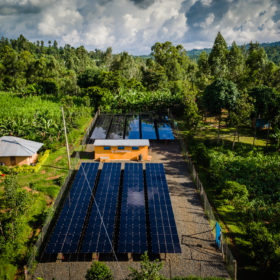
Risk of a ‘bridge to nowhere’ effect in Africa’s electrification
A report from the United States’ Rocky Mountain Institute finds more work is needed on the demand side for microgrids and other rural electrification projects in Africa. Such projects, says the report, often focus on building generation capacity, with little consideration for the ability of end users to make good use of energy.
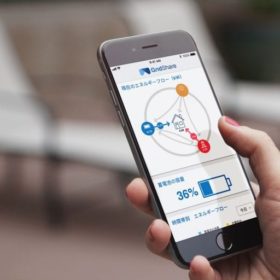
Moixa launches 35 MWh battery cluster in Japan
The smart battery storage supplier has launched a 35 MWh cluster in Japan. This could grow to over 100 MWh within a year, says Moixa.
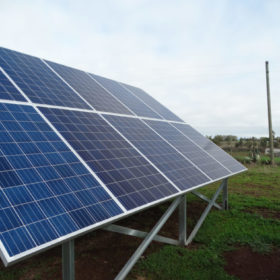
Use of PV can reduce diesel consumption in energy-intensive cultivation in southern Europe
Italian, Spanish and Portuguese scientists have published a study about energy consumption and the environmental footprint of the use of solar-hybrid irrigation systems in olive plantations in Portugal and Morocco.
