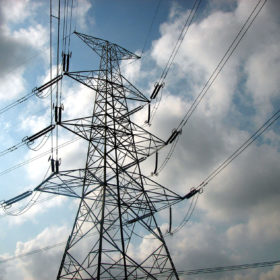
European Utility Week: ‘The confidence is coming back’
The energy transition is becoming ever more apparent among power companies, as was evident at the European Utility Week event last week in Paris, which showcased the hopes and fears of energy companies. Rebranding next year to ‘Enlit’, the organizers aim to reach the whole energy industry.
Turkey to hold 1 GW solar tender in April
The Turkish government is planning to assign 100 solar projects with a capacity of 10 MW each across 39 different provinces via a new procurement exercise. The tender will be held on April 20, 2020.
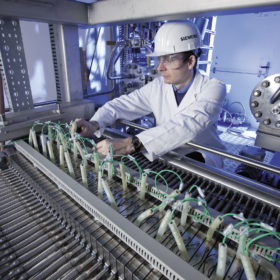
Engie and Air Liquide join forces to develop green hydrogen
A cooperation agreement was signed by the French corporations to launch the HyGreen Provence project, which is expected to produce annually 1300 GWh of solar electricity and 10,440 tons of green hydrogen by 2027.
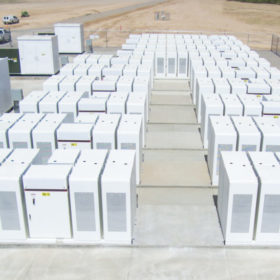
Salt River Project joins big boys of battery storage
The Salt River Project has announced a 250 MW, 1,000 MWh battery project in Little Rainbow Valley, Arizona. The installation will be the largest in the state and among the largest in the United States.
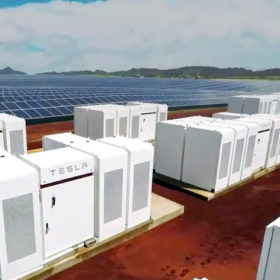
California spies solar-plus-storage domination by 2030, with 11 GW/44 GWh of batteries
The state’s 2019 Integrated Resource Plan foresees just over 11 GW of solar power generation capacity and at least 11 GW – with a possibility of up to 19 GW – of energy storage necessary to meet resource adequacy as part of the state’s legally required 60% renewable portfolio standard by 2030. Prices have halved since 2017.
Mirova raises €857m in Eurofideme 4 funding round for renewables
The investment manager is now Europe’s largest renewable energy fund. The €1.3 billion group already has a 1.8 GW generation portfolio.

Three steps to fast-charging potassium batteries
Scientists led by Moscow’s Skolkovo Institute of Technology have drawn upon several of their recent battery material innovations to create a potassium-ion device. The institute says its development will pave the way for ultrafast and durable, high capacity metal-ion batteries, to supply rising demand for energy storage innovations.
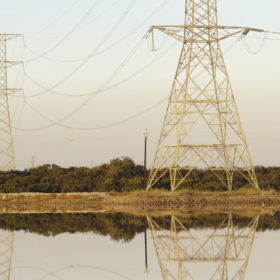
Flexible energy supply companies hampered by lack of policy
Britain’s renewable energy trade body has published a report examining the state of flexibility market readiness in nine European markets. The result makes for sobering reading for Germany, France and the U.K.
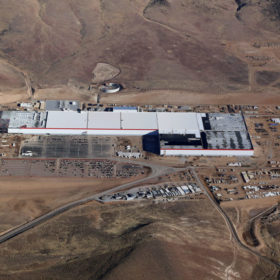
Tesla to build first European gigafactory in Germany
Elon Musk has promised a fab near Berlin that will help create up to 10,000 new jobs. Tesla wants to build the facility near the city’s controversial new BER airport.
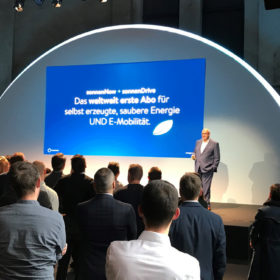
Sonnen adds electric cars and rooftop PV to its monthly payment plan
Sonnen presented two new products in the usual hip ambiance of Berlin E-Werk. In addition to home storage and electricity, the company now offers electric cars and PV systems with battery storage on a subscription model in Germany.
