
China to engineer a gigawatt-scale PV plant – in space
Plans were broadly sketched out in the nation’s twelfth five-year plan, in 2008. Since then China’s Defense Science and Technology Bureau has supported key technology research. An initial, megawatt-scale project is planned in the stratosphere sometime in the 2021-2025 period.
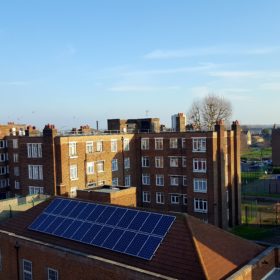
Centrica invests in Internet of Things startups and sees 4.5 GW flexibility potential in the UK
With its investment, the energy company has broadened its portfolio of ways to help customers save on energy bills. There are multiple energy companies pursuing similar goals at the moment as distributed generation and storage solutions require utilities to find new business models; not the least to avoid grid expansion costs.

Lyon’s BePositive event shows confidence in French PV market remains strong
The solar event in Lyon illustrated how expectations of French solar remain big despite lower-than-expected development and issues related to regulations and carbon footprint requirements. The large participation of international and Chinese players seeking business among installers and distributors is a signal things may improve in the short term, and larger volumes may be deployed in the coming years.

Tender for 20 MW of floating solar-plus-60 MWh storage in Indian archipelago
The Solar Energy Corporation of India has invited bids for the development of an aggregate capacity of 20 MW of lagoon-based floating PV with 60 MWh of battery-based storage systems in the union territory of Lakshadweep.
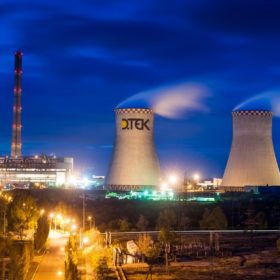
Ukraine’s largest PV project secures provisional FIT license
The 246 MW Solar-Farm 1 is being developed by the nation’s largest energy holding and coal power producer, DTEK. The plant will be on the territory of a spent quarry.
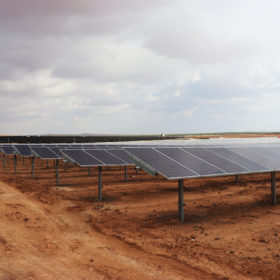
First Middle Eastern utility-scale solar-plus-storage plant comes online
The 23 MW/12.6 MWh facility is near Mafraq, in northern Jordan. The storage system will offer peak shaving to increase grid stability while enhancing solar output.
Cambodia’s utility tenders first, 60 MW, section of National Solar Park
Electricité du Cambodge has launched an international tender to procure a solar project in Kampong Chhnang province, on a build-own-operate basis. The project is the initial phase of the 100 MW National Solar Park, which is being supported by the Asian Development Bank.
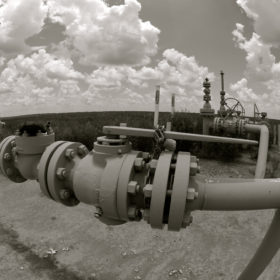
Power-to-gas crucial for solar-based energy system
In the Infrastructure Outlook 2050 study, Gasunie and TenneT say ambitious EU climate targets can only be reached through deeper integration of the power and gas infrastructure, and with power-to-gas technologies supporting renewables. The most bullish scenario for solar states how storage and power-to-hydrogen capacity could be crucial to meet seasonality in supply and demand.
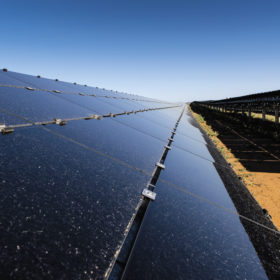
From laggard to leader: New South Wales Labor party’s election pledge for extra 7 GW of renewables
Australia’s Smart Energy Council welcomed yesterday’s launch by the NSW Labor party of a policy to drive 7 GW of renewable energy into the National Energy Market by 2030 as “the biggest rollout of renewable energy in Australia’s history”.
Pacific island nation re-tenders big solar-plus-storage project
An initial tender on Palau was won by French energy company Engie, through its unit Engie Electro Power Systems. The 100 MW microgrid project consisted of coupling 35 MW of solar and 45 MWh of storage with diesel generation.
