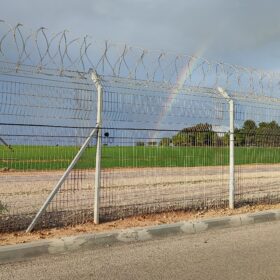
Israel to use solar fences to protect villages
Against the backdrop of its war with Hamas, Israel has started allowing villages to install solar fences to improve protection for residents.
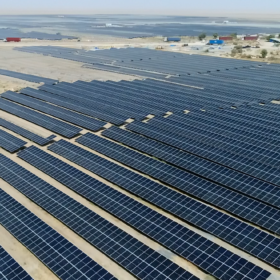
Indian state of Gujarat state tenders 1 GW of solar
Gujarat Urja Vikas Nigam Ltd. (GUVNL) has started accepting bids to develop up to 1 GW of solar projects, to be set up on a build-own-operate basis.
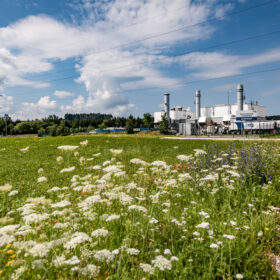
The Hydrogen Stream: Rising demand driving blue hydrogen plans
Air Products has announced plans for Europe’s largest blue hydrogen production plant, while RAG Austria says it has commissioned “the world’s first 100% hydrogen storage facility in a porous underground reservoir.”
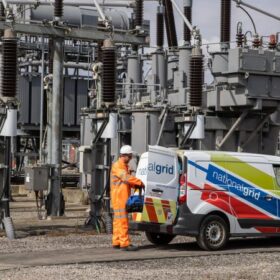
UK grid operator streamlines 10 GW of battery storage
Plans to connect around 10 GW of battery energy storage projects in England and Wales are now in the fast lane. This comes on top of 10 GW of capacity unlocked at distribution level, including shovel-ready solar farms, onshore wind, and battery storage projects.
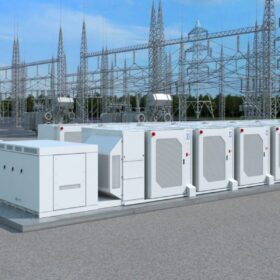
India’s NTPC tenders 3 GW of renewable storage
NTPC, an Indian state-run power producer, recently tendered 3 GW of renewable storage and an engineering, procurement and construction (EPC) package for 630 MW of solar projects.
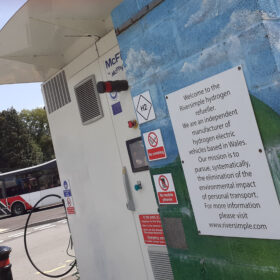
Europe should produce its own green hydrogen
As the cost of generating clean energy continues to fall, producing green hydrogen in Europe, rather than importing it from Africa – with all the transport costs and raised carbon footprint that would entail – is beginning to look like an increasingly viable option.
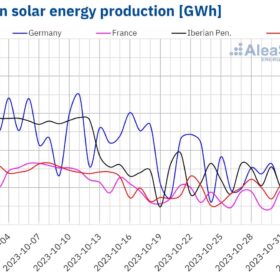
Record-high wind energy production in Italy while Euro electricity prices slide
The Italian market set a record high of 846 GWh of wind energy generation during the first week of November. Meanwhile, European electricity demand decreased over the same period and the MIBEL market registered 19 hours of €0.00/MWh ($0.00/MWh) prices.
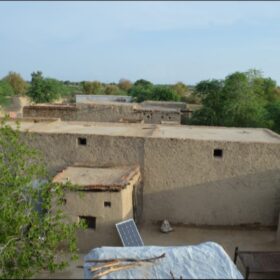
New research sheds light on off-grid solar costs in remote villages
An international research group has assessed the economic feasibility of exclusively powering remote villages in Pakistan with off-grid solar-plus-storage projects. They said that their proposed system configuration has a “justifiable” net present cost.
India’s NHPC allocates 3 GW of solar for $0.030/kWh
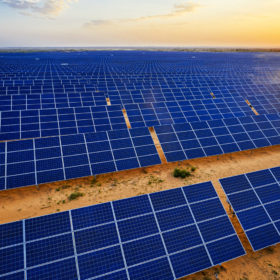
NHPC has allocated 3 GW of solar capacity at a rate of $0.030/kWh to developers who can set up projects connected to the interstate transmission system across India.
NREL forecasts rising US utility-scale solar costs, falling residential prices
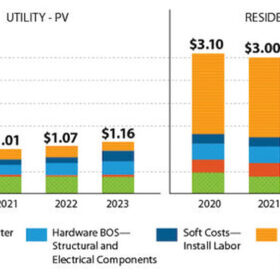
The US Department of Energy’s National Renewable Energy Laboratory (NREL) has updated its annual cost modeling tool in light of the US Inflation Reduction Act (IRA). It has identified higher labor costs for utility-scale solar projects and falling hardware costs due to new manufacturing tax credits.
