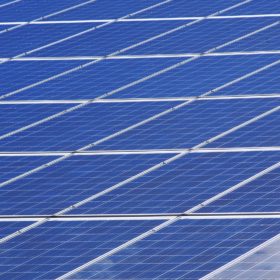
Central Electronics Limited tenders 95 MW of solar sites in Indian state of Maharashtra
The successful contractor will install the arrays in blocks of 2-10 MW and will carry out all stages of installation, from site surveys through to 12 years’ operation and maintenance.
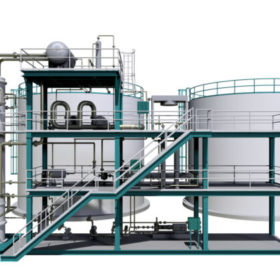
The Hydrogen Stream: New tech to store 5 tons of hydrogen per day
Proton Motor Fuel Cell and xelectrix Power have also developed a complete system that combines fuel cell and battery storage technologies and U.S.-based Plug Power is building a 100 MW electrolyzer in Egypt. Furthermore, Germany said it wants to deploy 10 GW of hydrogen capacity by 2030 and South Korea unveiled its hydrogen strategy.
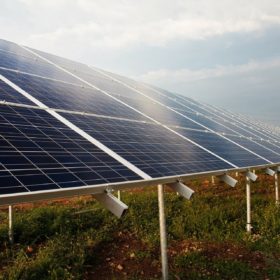
France deployed more than 2 GW of PV in first nine months of 2021
The country’s cumulative PV capacity reached 13.3 GW at the end of September. This year’s growth was triggered by a strong increase in utility-scale solar projects.
Poland may reach 30 GW of solar by 2030
The Eastern European country is expected to reach 10 GW of solar capacity by the end of 2022, according to the Polish research institute Instytut Energetyki Odnawialnej. This projected growth should materialize despite a strong contraction in the distributed generation segment.
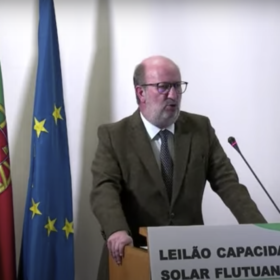
Portugal launches auction for 263 MW of floating PV
Through the procurement exercise, the Portuguese authorities want to select floating PV projects between 8 to 10 MW in size. Six water reservoirs have already been identified for their deployment.
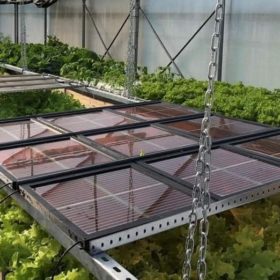
Semi-transparent solar module for greenhouse applications
Manufactured by scientists in Italy, the 3.88%-efficient organic solar panels are able to filter the light from the roofs of greenhouses. They are also capable of supplying a portion of the electricity required to power the greenhouse’s temperature and humidity sensors.
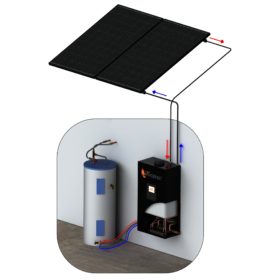
Solar heat pump solution for water, pool heating
U.S. solar thermal specialist Fafco is set to launch a new photovoltaic-thermal heat pump solution for water and pool heating. The system consists of photovoltaic-thermal panels, a 5 kWh thermal battery with a heat pump, and an electric hot water heater.
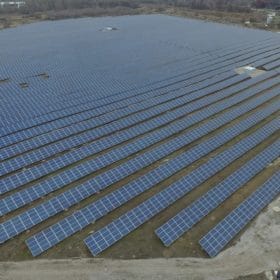
A net-zero Canada would need 1.6 GW of solar per year from now on
Clean energy trade group the Canadian Renewable Energy Association has told policymakers CA$8 billion worth of solar and wind projects will be needed each year to decarbonize the electricity supply by 2035 and remove net emissions by mid century.
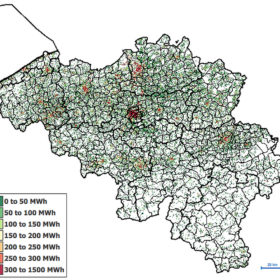
Belgium’s rooftop solar potential estimated at 99.6 GW
According to recent analysis by Belgian institute EnergyVille, rooftop PV and onshore wind have the technical potential to reach 118 GW of capacity in Belgium. Of the three Belgian macro-regions, Flemish-speaking Flanders is the one with the largest solar potential for rooftop systems, at 67.56 GW, followed by French-speaking Wallonia, with 31.54 GW, and the Brussels metropolitan region, with 4.23 GW.

Hunting the sun with Harris hawks optimization algorithm
An Iranian-Canadian-based research group has conceived a nature-inspired algorithm to estimate the model parameters of PV systems. The proposed tool mimics the exploring, exploiting and attacking strategy of the Harris hawk, a bird of prey species that cooperates when hunting.
