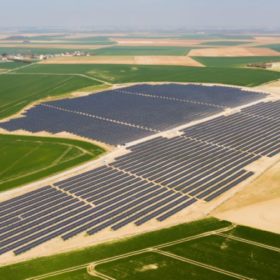
Eni continues rapid Spanish solar expansion with acquisition of Dhamma project pipeline
The decision of the Italian energy firm to acquire a 2.8 GW-plus solar pipeline in Spain and France has come on the same day it was announced Eni would assume 1 GW of solar capacity in Spain from another business. The value of neither deal, nor the form of finance involved, has been revealed.
Italy’s Eni to acquire 1.2 GW renewable project portfolio in Spain
Independent asset manager Azora is selling the renewable energy portfolio, which includes five large solar PV parks totaling 1 GW in advanced stages of development, located in Andalusia, Castilla-La Mancha, Castilla y León, Catalonia, Galicia, and La Rioja, to Eni.
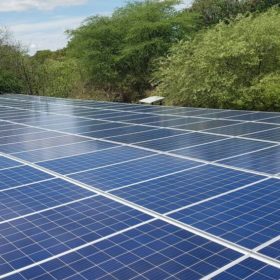
Botswana utility signs nation’s first PPAs for independent solar projects
Two projects with a total generation capacity of 4 MW will be the first of a planned 12 that are set to bring 35 MW of solar to the grid of the Southern African nation by the end of next year.
The Hydrogen Stream: New tech to reduce weight, costs of hydrogen fuel cell vehicles
U.S.-based Hyzon Motors has developed a new onboard hydrogen storage system technology capable of reducing the weight and manufacturing cost of commercial vehicles powered by hydrogen fuel cells. Meanwhile, India’s largest oil provider has announced its first green hydrogen project and the Dutch government has awarded a subsidy contract to an offshore green hydrogen demonstrator.
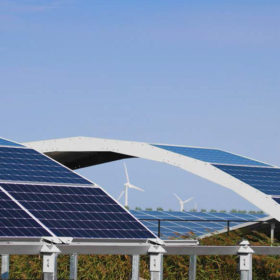
Arc-shaped PV system for agrivoltaics from Germany
The PV mounting system was developed by Germany-based Goldbeck and will initially be available in the Netherlands from 2022. The company will test the new technology in a 45 MW PV project.
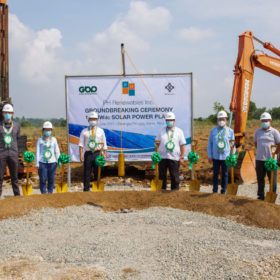
Work begins on 115 MW solar park in the Philippines
PH Renewables, Inc. (PHRI), a subsidiary of Global Business Power Corporation (GBP), which is itself part of the Philippines power utility Manila Electric Company (Meralco), has begun construction on a 115 MW solar park in Rizal, Luzon.
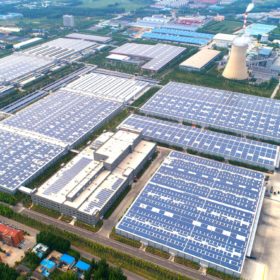
World’s largest rooftop PV plant powering Chinese industrial park
The 120 MW PV facility was grid-connected in late 2020 is located at an industrial park in China’s Shandong province. Sungrow supplied its string inverters for the project.
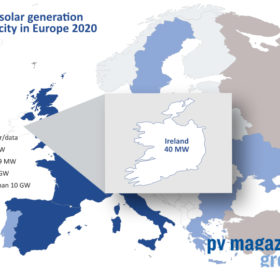
Ireland set for another 400 MW of solar
Power Capital Renewable Power has acquired a controlling stake in an extensive solar portfolio under development by Terra Solar.
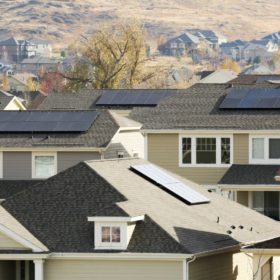
Residential solar demand is ‘through the roof’
One question is whether or not manufacturers can keep up with demand, particularly inverters and semiconductors.

Brazil’s recent energy auctions
Solar developers only had limited success in Brazil’s latest energy auctions, with relatively higher prices for PV. Several analysts spoke to pv magazine about the results of the procurement exercises.
