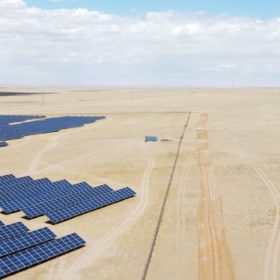
Mongolia has first smart grid management system installed–from the UK
Covid-19 border closures meant the first ‘active network management’ system was planned and commissioned for the Asian nation by the U.K. division of Saudi-owned smart grid specialist ZIV Automation.

Russia introduces net metering for small-sized PV
The new net metering provisions came into force three years after the legislative process was launched. Power surplus will be sold to the grid at a rate of up to RUB2/kWh ($0.026).
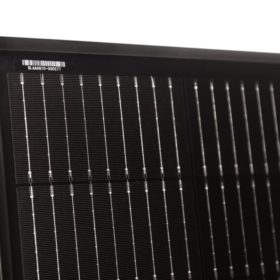
Solon is back–and with it, the ambition of offering superior PV products
The German photovoltaic manufacturer was once a trademark for German quality. After two bankruptcies, it is again active in Europe, primarily in the commercial and industrial rooftop segment. It sticks to the same philosophy: to offer superior solar solutions.
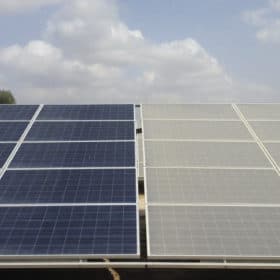
AI identifies a $14bn solar problem
How do you know when an inverter or module is under-performing? Monitoring services should shed light on problems but AI-driven digital asset manager Raycatch says much information is hidden behind a wall of “noise.” Breaking that wall with advanced data analysis could unlock billions of cost savings.
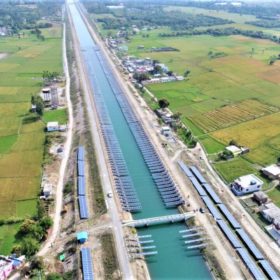
Solar arrays on canals
PV installations on canals are common in India, as they provide electricity without occupying land, while reducing evaporation. However, they are still more expensive than ground-mounted PV projects.
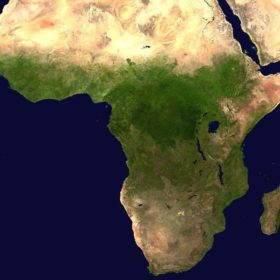
Nairobi’s Sunfunder sets up $70m pot for solar and storage in Africa and Asia
The oversubscribed fund was closed with the help of a commitment by Austria’s national development bank. U.S. and Swedish state-owned lenders and impact investors dominate the pool of contributors to the debt finance, which will fund small-scale installations.
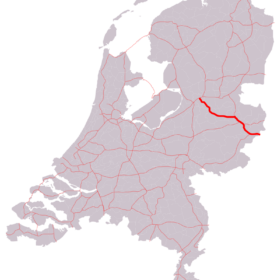
Dutch water agency to install more PV along highways
The Dutch water management agency plans to install solar along a highway in Overijssel. The project is part of a plan to build projects on state land, as the Dutch PV sector continues to search for alternative surfaces on which to deploy PV.
First PPA-linked solar park in Zambia
Zambia-based GreenCo Power is seeking independent power producers for the construction of a solar park with a capacity of up to 40 MW in the sub-Saharan country. The pilot project will be the first in taking advantage of new rules that liberalized the Zambian energy market by enabling bilateral power purchase agreements.
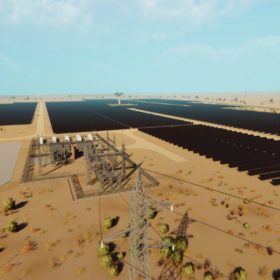
20 MW/5 MWh solar-plus-storage project set to begin construction in Malawi
The Golomoti solar plant is expected to come online in 2022. The plant will be used to provide grid stability and reduce national dependence on diesel generators and hydroelectric generation.
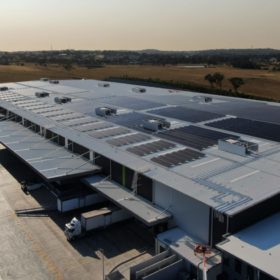
Australia’s largest energy provider acquires solar installers
AGL has revealed plans to acquire Epho and Solgen Energy Group, which will make it Australia’s largest climate polluter and its largest commercial solar provider.
