
Brazil’s PV capacity surpasses 38 GW
Brazil has pushed past 38 GW of total installed PV capacity, with around 26.3 GW consisting of distributed-generation solar systems.
Hybridizing PVT energy with heat pumps, borehole storage
A European research group has tested an energy system combining PVT collectors, a water-to-water heat pump and borehole thermal energy storage in an Italian swine farm and has found the proposed system can completely replace fossil fuel-based power generation.
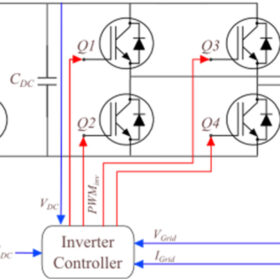
The impact of climate-based PV panel degradation rates on inverters
New research from Belgium shows the importance of assessing inverter reliability by including climate-based PV panel degradation rates. The scientists found that, especially in hot and arid climates, PV inverters should be designed with parameters above the standard value.

Cyprus set to curtail 28% of renewable electricity in 2024
The Transmission System Operator of Cyprus (TSOC) predicts that transmission and distribution grid operators will need to curtail 28% of the nation’s annual green energy production in 2024.
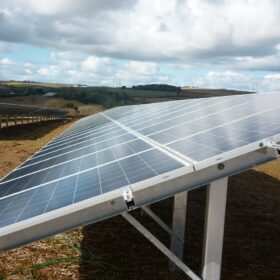
Africa’s annual PV additions hit 3.7 GW in 2023
According to new figures from the Africa Solar Industry Association (AFSIA), the continent’s cumulative installed PV capacity reached 16 GW at the end of December, based on 3.7 GW of new annual installations.

The impact of wildfire smoke on rooftop PV
While investigating on the effects of wildfire smoke on rooftop PV installations, a group of scientists in Australia has discovered that solar arrays, due to their sensitivity to smoke, could serve as an early warning detection of wildfires by providing temporal and spatial information on the presence and approximate concentrations of smoke.

India focuses on residential rooftop PV, EV infrastructure in new budget
Indian Finance Minister Nirmala Sitharaman has submitted an interim national budget for fiscal 2024-25 to parliament, with a focus on residential rooftop solar, funding for offshore wind, and support for EV manufacturing and charging infrastructure.
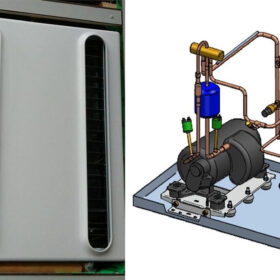
Façade-integrated R290 split-type heat pump for domestic hot water
Researchers in Austria have developed a new heat pump system for residential applications that reportedly achieves a coefficient of performance ranging from 2.82 to and 3.11 at an outdoor air temperature of 10 C and 20 C, respectively. They also found the system was able to supply the comfort conditions at all tested outdoor temperatures.

U.S. researchers testing dual-use solar snow fence
Pairing electricity production with snow drift barriers to protect roads is being evaluated by the Minnesota department of Transportation.
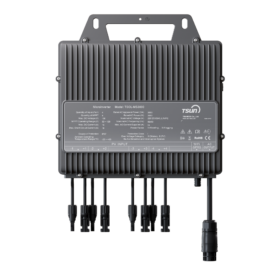
TSUN releases new series of microinverters
Chinese manufacturer TSUN says its Titan series of microinverters can handle 15 A of continuous input DC current. They also feature a 97.2% efficiency and four maximum power point tracking (MPPT) channels.
