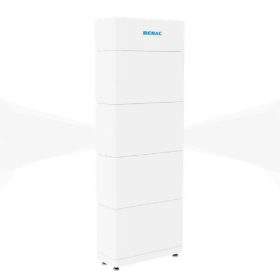
Renac Power unveils high-voltage residential battery
Renac Power’s new plug-and-play battery has a storage capacity of 3.74 kWh, but it can be enhanced in series with up to five batteries to 18.7 kWh. It has a nominal voltage of 96 V and a voltage range of 81 V to 108 V.
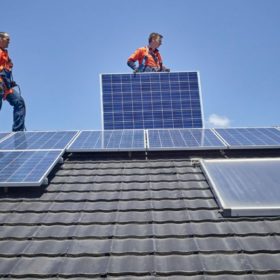
Australian solar companies battle to keep staff
Australian solar companies are reporting staff shortages, leading to false price points around the value of installers. Scott Mason, general manager of Platinum Solar Designs, says the shortages aren’t simply part of the nation’s broader skills scarcity; rather, they are endemic to the PV industry and are linked to regulatory issues.
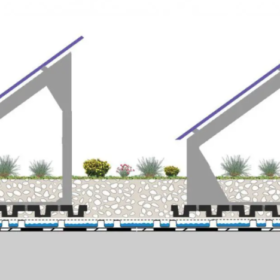
Novel PV system design for green rooftops from France
French startup Ecovégétal has developed a PV system configuration that uses vegetation to reduce the operating temperature of the modules. It says the presence of certain plants on a flat rooftop can even serve as a bulwark against the risk of fire.

Elon Musk wins SolarCity lawsuit, avoids $2 billion judgment
Business magnate Elon Musk has avoided what would have been the largest judgment in US history on an individual executive.
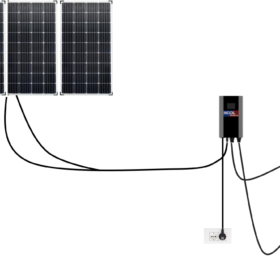
New PV water heater from Germany
German startup Nexol has developed a photovoltaic water heating system that relies on a smart controller, with either DC and AC power. It decides autonomously if grid electricity or PV is used, with the latter always preferred.

India’s race to 175 GW of renewables slowed by performance of key states
A new report shows that the Indian states of Andhra Pradesh, Madhya Pradesh, Maharashtra, Tamil Nadu and Uttar Pradesh accounted for two-thirds of India’s 65 GW shortfall on its 175 GW renewable energy target, as of March.
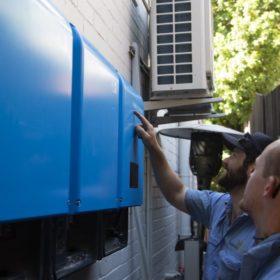
More than half of Australian PV installers moving into storage
The number of solar installers in Australia offering storage solutions grew considerably in 2021 and promises to surge again this year, according to a survey by EUPD Research.

Quebec publishes draft documents for 1.3 GW tender
The Canadian provincial government’s Green Economy Plan, launched in November 2020, envisages a 37.5% reduction in greenhouse gas emissions en route to net zero by mid century.

The usual crumbs for solar in British energy strategy focusing on North Sea oil and gas
A mixture of home-grown fossil fuels, possibly including fracked shale gas; clean power; nuclear; hydrogen; and smarter grids, apparently in that order, will make up the UK’s proposed energy security response in the wake of Russia’s invasion of Ukraine.
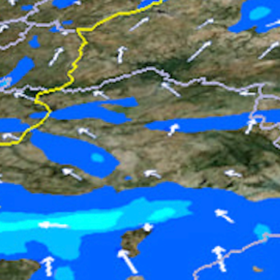
New method for long-term prediction of renewables generation in Europe
Developed by scientists in Spain, the new methodology is claimed to be capable of mitigating energy crises in Europe through climate predictions.
