
Nextracker introduces solar mount foundation services for soil types ‘anywhere’
The solar tracking provider introduced NX Anchor, further expanding the types of soil and areas that solar installers can develop on.

Chinese PV Industry Brief: Risen, Sungrow, Arctech reveal H1 results
Module maker Risen Solar has posted a net loss of CNY 963 million ($135.2 million) for the first half of 2024, while Sungrow and Archtech have recorded profit increases.

The effects of wind on single-axis PV trackers
Scientists in South Africa have conducted full-scale research on the effect of wind load on PV panel mounting rails for more than 100 days. Compared to standard design codes, they found lower combined wind load coefficients. Maximum loads occurred for an easterly wind direction.
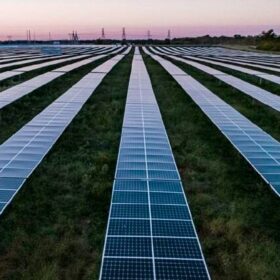
Maximizing solar efficiency through bifacial tracking systems
The solar energy industry continues to innovate, striving to improve the efficiency and reliability of photovoltaic systems. One of the most promising advancements is the development of bifacial modules combined with tracking systems. These technologies aim to capture more sunlight and convert it into electricity, making solar energy more effective and affordable. IEA PVPS Task 13 is at the forefront of this innovation, working to enhance the performance and reliability of PV systems. This article explores the concept of bifacial tracking, its advantages, challenges, market developments, and the significant contributions of IEA PVPS Task 13.
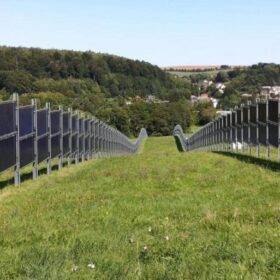
Next2Sun bets on Italy for market expansion
Despite difficulties in France, Next2Sun still sees growth opportunities in Europe, starting with Italy. The German agrivoltaics supplier tells pv magazine that it is also increasingly active in Japan.
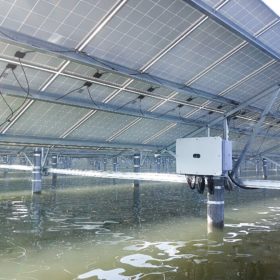
Chinese PV Industry Brief: CEEC launches 15 GW inverter procurement plan
Inverter manufacturers such as Sungrow, Huawei, Sineng, Growatt, Kstar, and TBEA are all participating in CEEC’s procurement scheme, which aims to source around 15 GW of products.
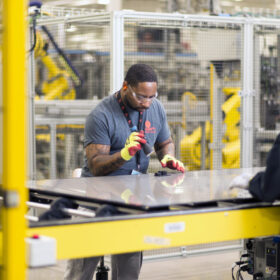
Bill aims to cut 45X tax credits for Chinese solar makers in the U.S.
While the lucrative tax credits has attracted clean energy manufacturers from around the world to build factories in the U.S., the fact that many of the new manufacturing facilities are from Chinese companies has created a controversy that this new bill aims to solve.
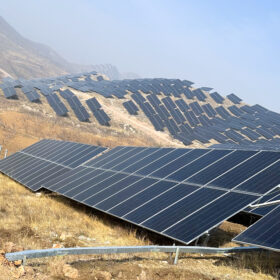
Mibet releases mounting system for utility-scale PV
The Chinese company said its new GT1 product is made out of hot-dip galvanized Q235B steel and can withstand wind speeds of up to 60m/s.

Yield modeling platform for large-scale solar
Australian software developer PV Lighthouse has secured almost AUD 1.97 million ($1.32 million) to drive development of its SunSolve Yield advanced simulation engine, which is designed to improve yield forecasting for utility-scale solar projects.

Israeli startup launches agrivoltaic pilot in desert with double-axis sun tracking
Agri-Light has launched its first pilot agrivoltaic project, using a two-axis solar installation on a rail system to move solar panels horizontally above a vineyard in the Negev Desert. The results are due this summer, and the company plans to build commercial projects in Israel and Spain next year.
