
The year in solar, part I: New modules, flat-pack solar and inverter turbulence
The first part of pv magazine’s review of 2019 considers Q1, when solar early adopter Italy offered an optimistic start to the year by fleshing out its plans for PV but uncertainty still clouded the world’s biggest solar market. The potential for household solar installations to rocket the world over – helped by ever cheaper panels – prompted strategic decisions in the inverter market and analyst expectations were confounded as the cobalt and lithium price plummeted, bringing the EV revolution a big step nearer.
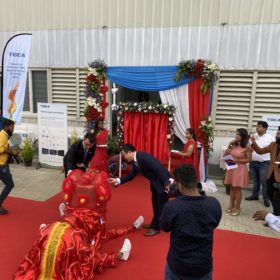
TBEA’s new 2 GW factory in India to produce string and central inverters
pv magazine recently attended the opening ceremony of TBEA’s GW-class new energy equipment manufacturing base in Bangalore, India. Bangalore is the capital of Karnataka state in southern India and the city also hosted the recent Intersolar India exhibition and conference in the same week as TBEA’s inauguration ceremony.

Reducing total harmonic distortion with adaptive filters
A Malaysian study has compared the techniques used to reduce total harmonic distortion caused by PV systems. The paper, which considers the benefits and drawbacks of the approaches studied, suggests the use of adaptive filters.

Solaredge brings its three-phase inverter with integrated memory interface to Europe
Solaredge wants to enable households have a higher solar self-consumption with its new product. The Israeli PV company’s solution can now be ordered in Germany, Austria, and Switzerland.
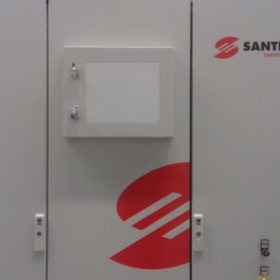
Enertronica Santerno reports higher inverter shipments in 2019
In a short conversation with pv magazine, the company’s CEO, Vito Nardi, said shipments for this year are expected to reach 866 MW. The inverter manufacturer also expects a rate of production of 2 GW per year by the end of next year.

Webinar Q&A: Avoiding the ‘green halo’ effect
Earlier this month, pv magazine held its first webinar under the UP sustainability initiative, looking at greenwashing versus verifiable sustainability. Initiative partner SMA and Professor Dustin Mulvaney shared their insights in a lively discussion. Many questions were submitted by the webinar participants. What follows are those we did not have time to answer.

German court rules in favor of Huawei on one of two SolarEdge patent claims
The court has deferred a hearing of the second case, with Huawei claiming that was due to insufficient evidence of patent infringement. The European Patent Office has revoked SolarEdge’s inverter multi-level topology patent and the Israeli company said it intends to challenge both decisions.

Chinese manufacturer TBEA to open inverter gigafactory in India this month
The Chinese company plans to roll out 2 GW of inverters per year from a facility which will have 1 GW production lines for both central and string products.

Bangladesh sets solar import standards
Complaints about sub-standard, cheap PV imports from China – and notably, India – have been heeded by Dhaka, which has issued a requirement for modules, inverters, charge controllers and batteries to attain IEC electrical standards.
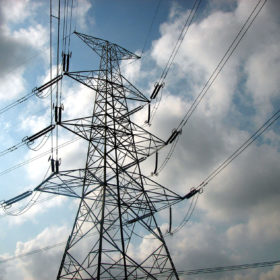
European Utility Week: ‘The confidence is coming back’
The energy transition is becoming ever more apparent among power companies, as was evident at the European Utility Week event last week in Paris, which showcased the hopes and fears of energy companies. Rebranding next year to ‘Enlit’, the organizers aim to reach the whole energy industry.
