
DNV publishes new floating PV safety standards
Norwegian classification society DNV has published two new guidelines covering the structural design of floats for floating solar systems and their mooring and station keeping systems.
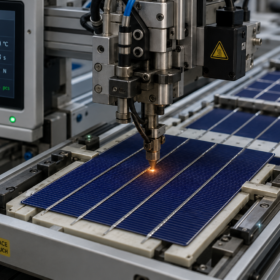
U.S. solar faces massive gap between stated capacity and real factory output
The U.S. solar industry tracks billions in new factory investments, but upstream bottlenecks and strict trade enforcement mean active factory production continues to trail behind headline numbers. Solar Energy Industries Association organized the American Solar and Storage Manufacturing Expo on Capitol Hill, which brought manufacturers together to highlight $43.1 billion in announced domestic manufacturing investments since 2022.
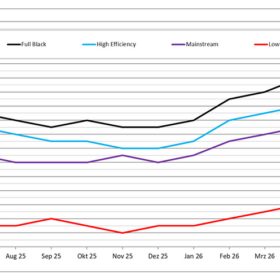
Banning China: Are we overreacting again?
PV systems and distributed energy assets require stronger cybersecurity and controllability, but measures to protect critical infrastructure should be based on careful, expert assessment rather than rushed policy decisions.

EU ban on Chinese inverters sparks strong response from Beijing
China strongly criticized the EU’s ban on Chinese inverters in EU-funded solar projects, warning it could damage trade relations, supply chains, and Europe’s energy transition.
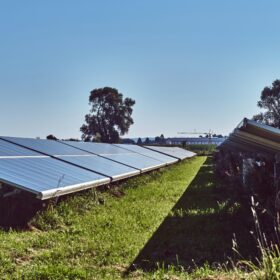
EU solar and storage push could cut power system costs by nearly half
A scenario analysis by SolarPower Europe, modeled by Rystad Energy, finds that accelerating PV and battery storage deployment could save the European Union €223 billion ($260.7 billion) in gas imports between 2026 and 2030 and reduce wholesale electricity prices by 14% compared with 2025 levels.
EU funding ban on high-risk inverters, including Chinese suppliers, extends to BESS
The new policy has already applied, and impacts billions in funding from the European Investment Bank on renewable projects including standalone and co-located storage.

Solar inverters can detect cyberattacks but no one sees the signal
A King Abdullah University of Science and Technology (KAUST) researcher whose lab has demonstrated up to 100% accuracy using a single hardware counter tells pv magazine that firmware-level detection of inverter attacks is technically viable – but today’s communication standards do not transmit the firmware‑integrity signal to operators.

CATL raises $5 billion in share sale, Sungrow files for Hong Kong IPO for the second time
CATL has completed a roughly $5 billion share sale in Hong Kong on Tuesday. Meanwhile, Chinese inverter and battery manufacturing giant Sungrow is making a second attempt at an IPO after its initial listing bid, launched in October 2025, lapsed.

EU moves to restrict funding for projects using inverters from high-risk suppliers
The EU is moving forward with a plan to restrict funding for PV projects using inverters from high-risk suppliers, citing cybersecurity concerns and issuing new guidance to phase them out. A transition period applies for certain projects linked to the EU grid, while others must exclude such suppliers by 2027.

TBEA launches 500 kW string inverter
The new inverter is designed around standardized 5 MW and 5.5 MW PV sub-arrays with the aim to reduce balance-of-system costs. It features a maximum efficiency of 99.0% and a high-voltage architecture of up to 1,600 Vdc and 1,000 Vac.
