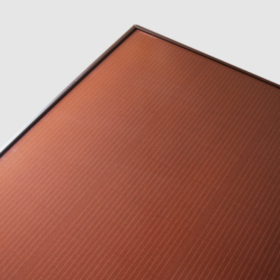
Solar Fabrik launches 400 W red-brown module for heritage roofs
Solar Fabrik has introduced a 400 W red-brown glass-glass PV module designed to meet strict aesthetic requirements for historic and protected buildings, offering a 20.02% efficiency and compatibility with traditional tiled rooftops.

Solbian launches solar kit for boat davits
Available in 80 W and 108 W versions using high-efficiency SunPower Maxeon cells, the kit offers wind resistance up to 25 m/s and easy installation on unused boat surfaces, according to the manufacturer.
Tracker-based agrivoltaics turn fields into wind-safe zones
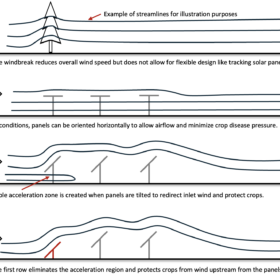
Cornell University researchers demonstrated that tracking solar panels in agrivoltaic systems can protect crops from wind damage while allowing airflow, outperforming traditional single-row tree windbreaks. They also proposed a new lowered-first-row panel design that improves wind protection, achieving up to 86% reduction in shelter-zone wind speeds under extreme conditions.

Ion beam technology offers pathway to low-defect silicon solar cells
Researchers in India demonstrated that ion beam implantation enables precise boron doping in silicon solar cells, reducing defects and improving charge transport. The proposed approach could support more efficient and reproducible p–n junctions, offering a pathway to higher-performance silicon photovoltaics.

Solar above 60° North: The Arctic as PV’s next frontier
An IEA-PVPS report finds that solar power above 60° North is not only viable but rapidly expanding, driven by cold-climate performance gains, bifacial technologies, and rising energy security needs. While challenges like extreme seasonality, snow, permafrost, and scarce data remain, Arctic PV is emerging as a critical—and technically distinct—frontier for global solar deployment.
UNSW unveils new ageing method to assess TOPCon solar module degradation
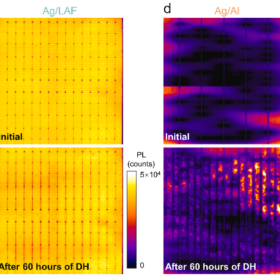
UNSW researchers developed a chemically selective, nitrate-based, single-sided accelerated ageing method for TOPCon solar cells that replicates the mildly acidic environment inside EVA-encapsulated modules. The proposed approach enables rapid, physically meaningful screening of front-side metallisation stability, reliably predicting module-level degradation and reducing development time and costs, according to its creators.
Extensive testing validates reuse of 23-year-old second-life polycrystalline solar modules
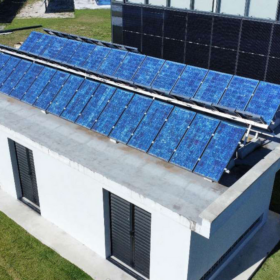
Researchers in Brazil tested second-life polycrystalline PV modules for two years and found they retained 87–88% of their original power, with minimal degradation and stable performance. Despite strong sustainability and circular economy benefits, economic incentives remain limited due to the declining cost and short warranties of new state-of-the-art silicon PV modules.

JinkoSolar drops Vietnam solar manufacturing project
JinkoSolar has formally terminated its 4 GW Hai Ha solar cell project in Vietnam, citing US antidumping duties that undermined its export economics. The company will maintain other Vietnamese operations while shifting focus to localized supply chains and Asia-Pacific and Middle East markets.
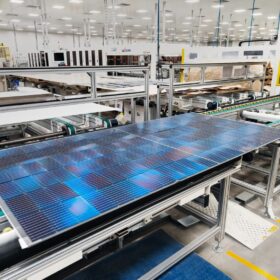
Premier Energies commissions 5.6 GW solar module facility in India
Premier Energies Ltd has commenced trial production at its 5.6 GW solar module manufacturing facility in Seetharampur, Telangana. The new facility produces G12R TOPCon modules with zero busbar (0BB) architecture.

IFC loans $125 million for polysilicon factory in Malaysia
The International Finance Corporation is providing an A Loan to Malaysian polysilicon producer OCI TerraSus that will partly finance the development of a semiconductor-grade polysilicon production facility in Sarawak, Borneo.
