
U.S. researchers developing photovoltaic dual-axis canopy
The “morphing skin” would track sunlight and have the flexibility and surface area to wrap across large surfaces, such as buildings and stadiums.
Chinese PV Industry Brief: PowerChina cancels 51 GW module tender for 2025
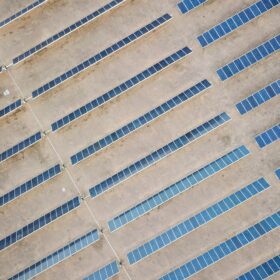
PowerChina has scrapped its 51 GW solar module tender for 2025 due to the impact of policy shifts on procurement needs. The tender, which began in November 2024, attracted 58 bids, with average quotes of CNY 0.68 ($0.093)/W for tunnel oxide passivated contact (TOPCon) modules and CNY 0.773/W for heterojunction (HJT) modules.
Global solar module shipments hit 703 GW in 2024
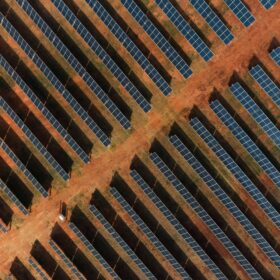
The new edition of the International Technology Roadmap for Photovoltaic (ITRPV), published this week, reports that average PV module prices last year dropped by 33% compared to the end of 2023.

EcoFlow launches balcony PV system, batteries with AI features
EcoFlow’s new Stream series, its second-gen balcony solar plant, enables battery coordination and plug-and-play solar for distributed batteries, plus third-party microinverter coordination for its new battery.

New research sheds light on intrinsic limitations of selenium solar cells
Danish researchers have analyzed fundamental material properties of selenium solar cells and have found their potential is higher than generally believed. They used carrier-resolved photo-Hall analysis to address discrepancies and reproduce experimental current-voltage and external quantum efficiency measurements.
Izpitek unveils products to transform inert surfaces into PV systems
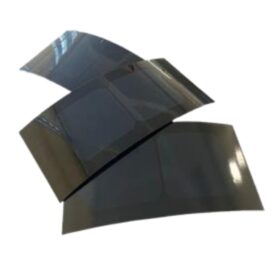
Izpitek is launching a new product line using patented tech to embed PV cells in composites, cutting weight by up to 95%.

Longi claims world’s highest efficiency for silicon solar cells
Longi said it has achieved a 27.81% efficiency rating for a hybrid interdigitated back contact, as confirmed by Germany’s Institute for Solar Energy Research Hamelin (ISFH).

Agrivoltaics for kiwis
Volta Group and Richel Group have commissioned a photovoltaic greenhouse in France for kiwi cultivation.

Chinese PV Industry Brief: Polysilicon output rises, stirring oversupply fears
China’s polysilicon and solar module prices held steady this week amid low trading volumes, but softening producer quotes and rising output across the supply chain signaled mounting oversupply risks.
Meyer Burger reports 2024 EBITDA loss of $257 million
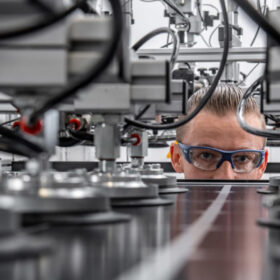
Meyer Burger has posted a CHF 210.4 million ($256.7 million) EBITDA loss for fiscal 2024, on sales of approximately €75 million. The Swiss PV manufacturer says its future is “highly uncertain” as it seeks new financing and works on restructuring plans to remain operational.
