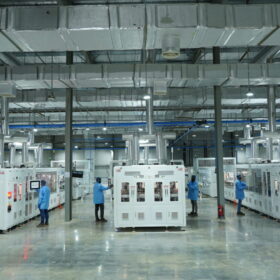
India adds 11.3 GW of solar module capacity, 2 GW of cells in H1 2024
India added 11.3 GW of solar module and 2 GW of cell manufacturing capacity in the first half of 2024, bringing the country’s cumulative production capacities to 77.2 GW for modules and 7.6 GW for cells, according to Mercom India.
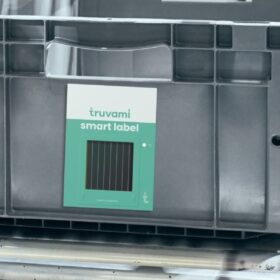
Swiss startup offers organic PV-powered asset tracker
Truvami has launched an organic PV-powered asset tracker equipped with localization and sensor technology for battery-free use indoors and outdoors, targeting logistics and manufacturing applications.
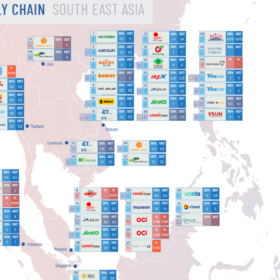
Sinovoltaics tracks 78.8 GW solar module capacity in Southeast Asia
The latest supply chain map from Sinovoltaics tracks growth across Southeast Asia, with module capacity reaching 78.8 GW, and 58 production projects tracked.

Building-integrated photovoltaic system integrating PCM on sides
Scientists have designed a new building-integrated PV system that uses 30 mm of phase change material on each side of the wall. The array reportedly achieved superior thermoelectric coupling performance compared to reference BIPV systems without PCM.
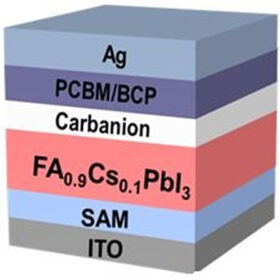
Inverted perovskite solar cell based on lead carbanion achieves 25.16% efficiency
Developed by Scientists in China, the solar cell reportedly achieved the highest open-circuit voltage ever recorded for an inverted perovksite PV device. The lead carbanion layer was responsible for reducing defects at the interface bewteen the perovskite layer and the electron transport layer.

Will Indian solar manufacturers go back-contact to the future?
Indian PV manufacturers are looking beyond tunnel oxide passivated contact (TOPCon) solar. Back-contact (BC) devices are an enticing prospect but many feel the technology is not mature enough. Uma Gupta considers the cost, yield, and reliability challenges that BC solar has to overcome.

Avada Group wants to build ingot-to-PV module, battery factory in India
Avaada will set up a wafer-to-module project to support the company’s existing PV module plant in Dadri. The factory will also manufacture next-generation batteries and electrolyzers.
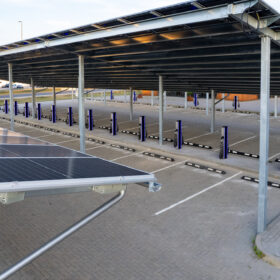
Lithuania’s largest PV carport powering 44 EV chargers
Lithuania-based Soliport has built what it claims to be the largest solar carport in the Baltic states. The 250 kW system is connected to 44 electric vehicle charging points and injects only a small portion of the electricity it generates into the grid.
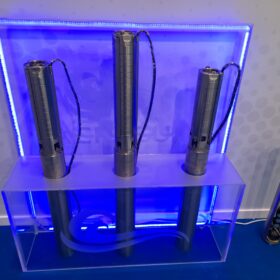
Helping the market of solar powered water pumps to thrive
Solar powered water pumps are one of the most important ways for off-grid communities to gain access to water cheaply and cleanly. Standards are required to enable this market to continue growing and the IEC is working on the appropriate specifications.

New IEA PVPS Handbook: A guide to proper solar resource data management
In its latest monthly column for pv magazine, IEA PVPS provides a comprehensive overview of the recently released fourth edition of the “Best Practices Handbook for the Collection and Use of Solar Resource Data”. The 530-page handbook, developed by IEA PVPS Task 16 in collaboration with NREL, elaborates on methods and models for accurately collecting solar data to plan and operate energy projects effectively.
