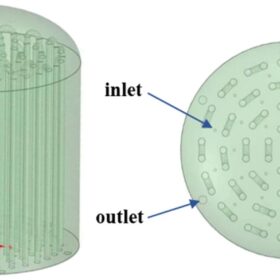
New tech to improve energy efficiency in Siemens polysilicon production process
Chinese researchers developed an electric heating model to support uniform material temperature in a novel four-ring, 80-rod industrial Siemens reactor.

France certifies first solar panels eligible for reduced 5.5% VAT
France’s Certisolis approved four Voltec Solar panels and one Meyer Burger module with carbon footprints under 530 kg CO₂/kWp, making them potentially eligible for the country’s 5.5% VAT rate.
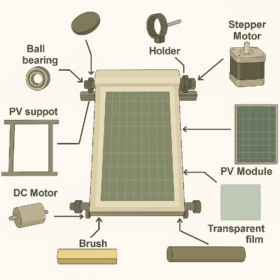
Solar panel cleaning based on rolling film, motors
Scientists in Morocco have developed a novel solar panel cleaning system designed to remove dust and bird droppings. Their prototype was built at a total cost of $386 and is ready to incorporate AI features in the future.

China’s polysilicon prices stabilize amid consolidation push
In a new weekly update for pv magazine, OPIS, a Dow Jones company, provides a quick look at the main price trends in the global PV industry.
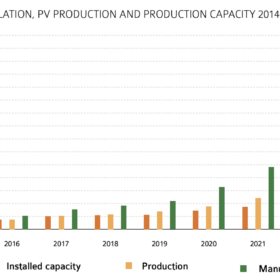
Thirty-five countries now operate GW-scale annual PV markets
The latest report from the International Energy Agency’s (IEA) Photovoltaic Power Systems Programme (PVPS) highlights that 2024 was another record year for solar installations but large overcapacities of solar cell, module and wafer manufacturing continued.

Dutch startup secures technology license, contractor for polysilicon plant
Resilicon says the basic engineering phase of its planned polysilicon plant in the Netherlands is underway after the project secured a technology provider and engineering, procurement and construction contractor. Once completed, the plant will produce high-purity polysilicon for solar supply chains.
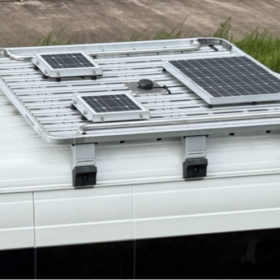
Shadow-aware route planning for vehicle-integrated photovoltaics
Japanese researchers have proposed a method for future vehicle-integrated photovoltaic route planning. It integrates environmental shading effects based on satellite and geographic information system data.
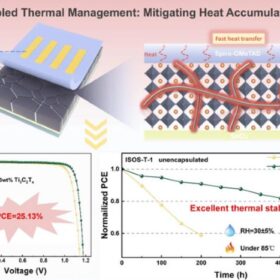
Perovksite solar cell based on MXene achieves 25.13% efficiency
A Chinese research group claims to have achieved remarkable efficiency and stability in a solar cell based on a perovskite absorber incorporating MXene, a novel type of 2D material known for its excellent conductivity, chemical stability, and thermal resilience. The device reportedly retained 80% of its initial efficiency after 500 hours.

Novel swapping technique for partially shaded PV systems
Researchers in India have developed an algorithm for quadrant swapping in PV arrays, enabling the creation of new quadrants containing either shaded or unshaded modules. The method was tested across ten shading scenarios with varying irradiation levels and demonstrated “superior” performance compared to conventional approaches.
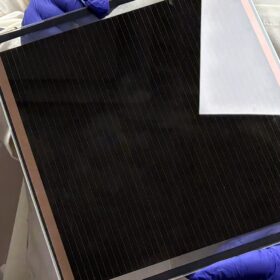
Sofab Inks achieves 22.2% efficiency in mini inverted perovskite solar panel
The U.S. startup said the 30 x 30 cm perovskite solar cell device featured its tin oxide electron transport material produced in a sheet-to-sheet slot die coating process.
