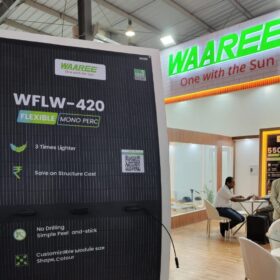
Waaree showcases 420 W mono PERC flexible solar modules
Waaree says its FLW series of flexible, lightweight solar panels can be seamlessly integrated into a diverse range of environments. It claims that they are ideal for applications in which traditional, rigid panels could pose challenges.
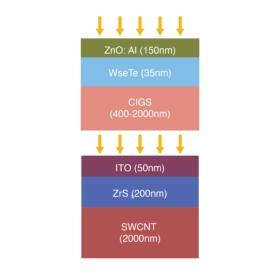
First attempt to design CIGS/SWCNT tandem solar cells promises 38.91% efficiency
Indian researchers have proposed to build tandem solar cells based on a CIGS top cell and a bottom cell relying on a single-walled carbon nanotube (SWCNT) absorber. SWCNTs were previously used in solar research as an alternative to conventional metal grid contacts or hole transport layers (HTLs), as they combine optoelectronic properties, flexibility, chemical stability, and simple transfer protocols.
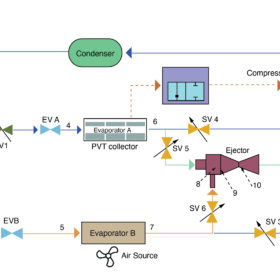
PVT-assisted heat pump for residential water heating
A group of scientists in China has designed a residential heat pump system with a potential cofficient of performance of 4.271 at -5 C. The system is reportedly able to adjust the required pressures based on solar irradiance intensity and ambient temperature
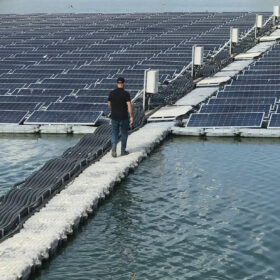
All floating PV technologies at a glance
An international research team has produced a comprehensive overview of more than 300 works of published literature on floating PV, spanning 2013 to 2022. The scientists laid out the benefits and challenges of the technology and pointed to gaps that should be filled with future studies.

First Solar could have $5 billion impact on U.S. economy by 2026
A study commissioned by First Solar analyzed the company’s actual and forecast U.S. spending in 2023 and 2026 when the company expects to have 14 GW of annual nameplate capacity across Alabama, Louisiana, and Ohio.
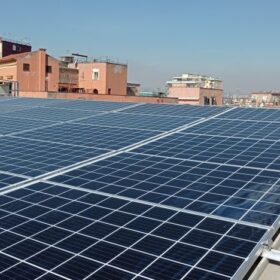
Italy publishes operating rules for energy communities
Italy’s long-awaited operational rules for energy communities are expected to spur development in the segment, which has only experienced limited growth volumes thus far.
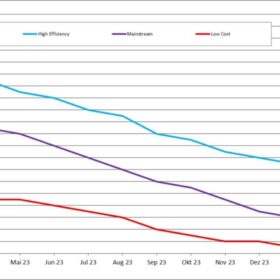
Hope at the end of turbulence
Growing demand for solar products is colliding with the hesitant shipment strategies of manufacturers, according to pvXchange’s Martin Schachinger.
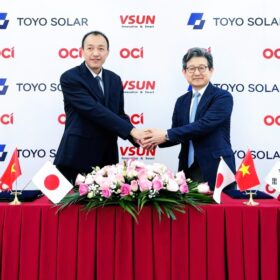
VSun Solar signs polysilicon supply deal with OCI
OCI has agreed to supply polysilicon to Toyo Solar, the cell production subsidiary of VSun Solar, in order to support wafer production.
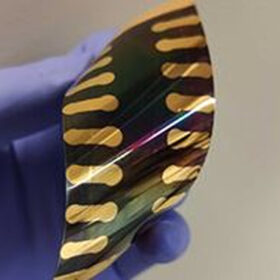
Fully printable flexible perovskite solar cell achieves 17.6% efficiency
Developed by scientists in Canada, the 0.049 cm2 solar cell was built in ambient air fabricationand with a reactant known as phenyltrimethylammonium chloride (PTACl). It achieved an open-circuit voltage of 0.95 V, a short-circuit current density of 23 mA cm−2, and a fill factor of 80%.
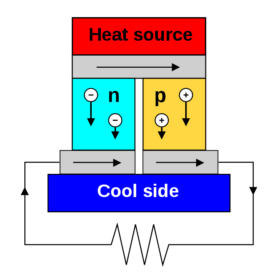
Enhancing PV performance with graphite-based thermoelectric generator
Indian scientists have built a PV system coupled with a thermoelectric generator using graphite as a heat dissipator. The graphite-based system achieved a higher output and temperature gradient than a reference system without heat dissipation.
