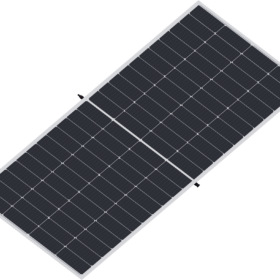
GoodWe releases 335 W BIPV panels with 17.4% efficiency
The panels measure 2,116 mm × 777 mm × 3.5 mm, weigh 5.6 kg/m2, and have a temperature coefficient of -0.35% per degree Celsius.
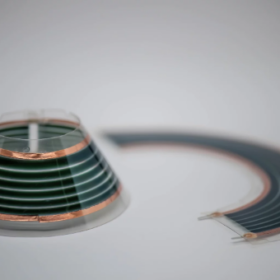
Dracula Technologies integrates organic solar cell into flexible storage device
Dracula Technologies has developed a new indoor technology for its organic photovoltaic (OPV) cells. It designed the tech to replace traditional batteries in connected devices.
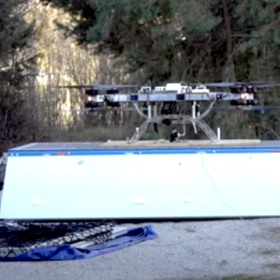
Italian startup offers drones to transport PV modules in remote locations
FlyingBasket has developed a drone that can carry up to 100 kg of payload over distances of 2.5 km, and up to 5 kg across 25 km.
The impact of temperature on III-V solar cells
Scientists in Spain have analyzed the impact of temperature and spectral conditions on III-V solar cells employed in concentrator photovoltaic modules. They claim to have assessed the cell behavior under unprecedented operating condition.

ClearVue scores commercial first with solar glass tech
Australia’s ClearVue Technologies has secured an order to provide its clear solar glass technology for a AUD 12 million ($8.0 million), six-floor building in Melbourne.
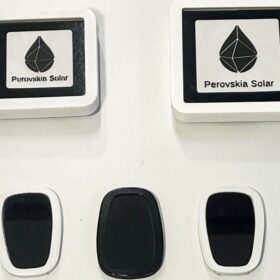
Swiss perovskite startup sets up indoor solar cell manufacturing
Indoor solar cell developer, Perovskia Solar, is setting up a factory in Switzerland that may reportedly print 1 million of its custom-designed perovskite devices annually. It targets the market for self-powering consumer electronics and internet-of-things devices, such as fire-alarms, fitness trackers, and sensors.
Rain does not sufficiently remove pollen from solar panels, say researchers
The US Department of Energy’s National Renewable Energy Laboratory (NREL) and its research partners say that various types of tree pollen can reduce solar panel efficiency by more than 15%. Unlike the immediate improvements assumed to follow heavy rain, recovery of performance post-pollen season is gradual. Post-rain manual cleaning can boost performance by 5% to 11%.
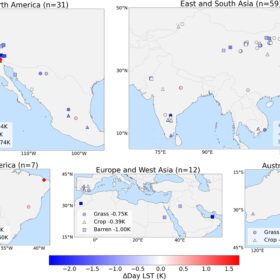
The effect of PV plants on albedo, vegetation, land temperature
Scientists have used remote sensing to analyze the effect solar farms have across 116 sites worldwide. They found that the cooling effect is higher during the daytime, with albedo decreasing by 0.016 for most facilities.
Whale algorithm to integrate rooftop solar with air source heat pumps
Researchers in China have developed an optimized version of the whale optimization algorithm that reportedly indentifies the optimal area ratio of rooftop PV systems and solar collectors used in combination with air source heat pumps. They demonstrated that the installation area of photovoltaic modules and collectors affects both the power side and the thermal side.
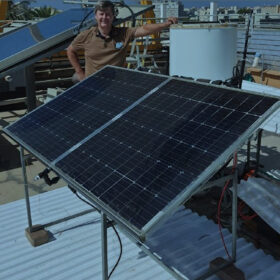
Israeli startup launches 530 W bifacial PVT panel
P.G. Solar Greener says that its new panels have a thermal capacity of 1,280 Wh. They can reportedly achieve an overall dual electrical efficiency of 26%, due to an embedded cooling technique.
