
Recipe for expansion
After years of debate, the Indian government made domestic manufacturing a central feature of renewables policy in 2021. The pivot came as the government sought economic growth and self-sufficiency following a border conflict with China. Vinay Rustagi, managing director of Bridge to India, says that trade barriers, subsidies, lower taxes, and demand growth have created the perfect recipe for expansion.
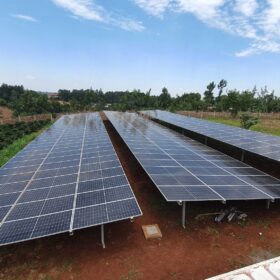
Kenya’s first hybrid solar-hydro plant goes online
Located near Nairobi, the project consists of a 150 kW solar array, a 50 kW crossflow turbine and a 240 KWh storage facility. SolarNow director and CFO Ernst Vriesendorp told pv magazine that despite the project’s humble size, it has ‘large’ benefits.
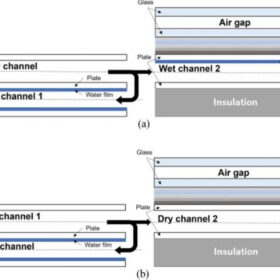
Reducing solar module temperature via dew-point evaporative cooling
Japanese scientists have designed a cooling system that reduces the solar panel operating temperature at the air inlet of the module. It consists of a dew-point evaporative cooler that supplies the near-saturation air to wet air channels that are attached to the back of a PV panel.

A reaction to Rystad’s recent estimates on European solar module stockpile
Rystad Energy has abruptly changed statements about photovoltaic module stocks in the EU. German PV analyst Karl-Heinz Remmers questions the numbers from the Norwegian consultancy and provides different figures.
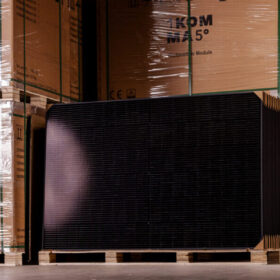
1Komma5° announces TOPCon solar module factory in Germany
1Komma5° says it plans to start production at a new TOPCon solar module factory in Germany from next year. The Hamburg-based startup aims to achieve an annual production capacity of 1 GW, with further expansion targets set to reach 5 GW by the year 2030.
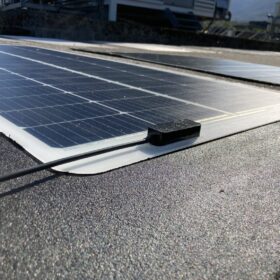
French startup raises funds to build 100 MW factory for ultralight solar modules
Heliup has raised €10 million ($10.5 million) to finance the construction of a PV panel manufacturing facility at an unspecified location in France.
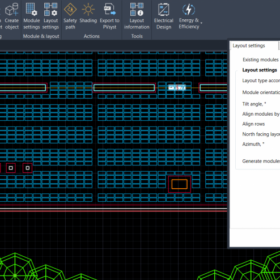
PVcase introduces AutoCAD tool for rooftop solar systems
PVcase has introduced a new AutoCAD tool for rooftop PV systems, featuring 3D building preparation, layout generation, shading calculation, and electrical design capabilities.
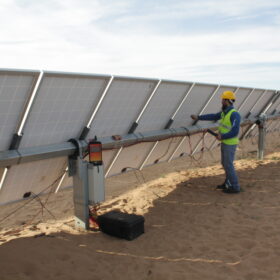
New method to take PV plant measurements in the field
Spanish researchers claim to have established new measurement methods to assess the performance degradation of PV modules without the need for removing and reinstalling the tested PV modules from their operating positions. The new approach is claimed to increase productivity in PV plant quality control activities.
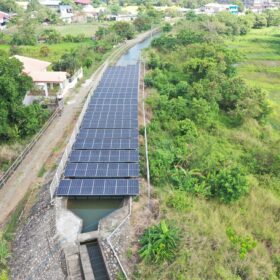
Philippines’ first canal-top solar irrigation projects go online
Philippine government’s National Irrigation Administration revealed that two canal-top solar arrays for irrigation purposes were recently commissioned. It also said that 147 solar-powered irrigation projects in the country will be delivered by the end of the year, with 183 in the pipeline for 2024.
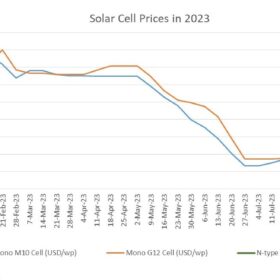
Solar cell prices are expected to hit fresh record lows following China’s Golden Week
In a new weekly update for pv magazine, OPIS, a Dow Jones company, provides a quick look at the main price trends in the global PV industry.
