
FuturaSun to start PV cell production with 10 GW solar factory in China
FuturaSun is betting on a vertical integration strategy with the launch of a 10 GW solar cell factory in Huai’an, China. It aims to start production in spring 2024.
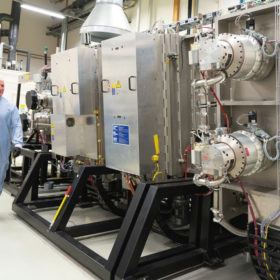
First Solar acquires Swedish perovskite specialist Evolar
First Solar has agreed to pay $38 million to buy Swedish manufacturing startup Evolar AB, as it seeks to expand development of high-efficiency tandem PV tech.
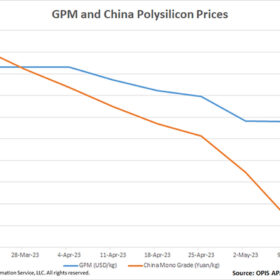
Polysilicon prices preserve downward trend, weighed down by supply factors
In a new weekly update for pv magazine, OPIS, a Dow Jones company, provides a quick look at the main price trends in the global PV industry.
Avoiding PV buyer’s remorse
New entrants to solar equipment procurement may be surprised to encounter constantly amended contract terms, index-linked price rises, and near-worthless defect warranties, but they reflect recent supply chain troubles. Clean Energy Associates’ Martin Deak offers a buyers guide.

Kaneka presents 29.2%-efficient 2T silicon-perovskite tandem solar cell
Kaneka’s two-terminal tandem perovskite solar cell has achieved the highest efficiency ever recorded for such a device based on an industrial Czochralski (CZ) silicon wafer. It has an open-circuit voltage of 1.929 V, a short-circuit current density of 19.5 mA cm−2, and a fill factor of 77.55%.
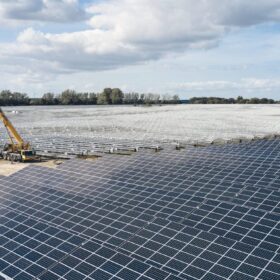
Enerparc COO signals 10-20% potential increase in European PV module prices
Growing interest in European-made solar modules for rooftop systems and PV plants reflects a willingness to increase investments, according to Enerparc COO Stefan Müller. In a recent interview with pv magazine, Müller discusses the market for corporate power purchase agreements (PPAs) and the viability of German solar PV tenders.
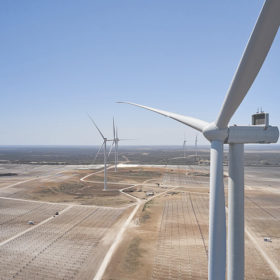
Tools to monitor PV hybrid system performance
Owners and operators of PV hybrid systems need to monitor and control system operation and performance, which generally involves the collection of big data sets. Data visualization techniques can simplify the monitoring and allow issues to be quickly recognized, says IEA-PVPS.
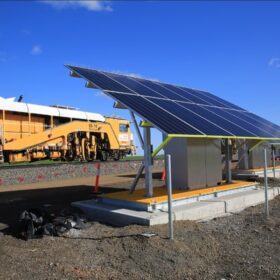
Solar for railway signaling sites
Australia’s largest rail infrastructure project, the Melbourne-Brisbane Inland Rail freight line, has made the switch to solar to power its signaling systems. The move is expected to deliver an estimated AUD 25 million ($16.93 million) in cost savings.
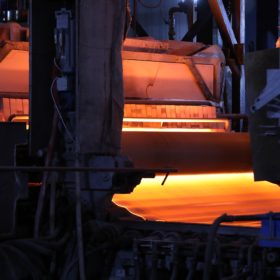
Borosil Renewables unit ramps up German solar glass capacity
Borosil Renewables says the solar glass capacity of its German unit, GMB Glasmanufaktur Brandenburg GmbH, has increased to 350 tons per day (tpd) from 300 tpd, following the modification of its furnace.

Chalcopyrite solar cell achieves 11.2% efficiency via silver alloying
Swedish researchers have used silver alloying to improve grain growth and crystal quality in the chalcopyrite absorber, which reportedly partly compensates for its high bandgap energy. The scientists fabricated a champion cell based on a ZTO buffer layer.
