
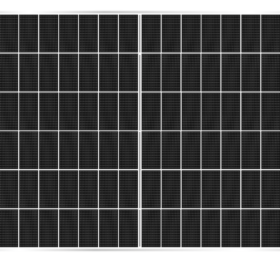
Huasun unveils 715 W heterojunction solar module
China’s Huasun launched a new line of five heterojunction (HJT) solar modules in 2022, with power outputs ranging from 680 W to 700 W. The company has now added a new 715 W module to the series, with an efficiency rating of 23.02%.
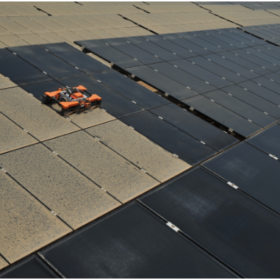
Impact of dust, heat, soiling on solar project performance
Scientists in Morocco recently conducted a year-long study on the impacts of soiling on PV modules in arid, dusty conditions. They found that soiling could contribute to daily performance losses of as much as 15%.

Australia funds ultra-low-cost PV future
The strength of applications for the Australian Renewable Energy Agency’s ultra-low-cost solar research funding round was so strong that the agency had to add AUD 1.5 million ($1.03 million) to its original allocation. The strength of competition pushed the process into 2023, but the 13 research projects aiming to achieve ultra-low-cost solar have now been awarded.
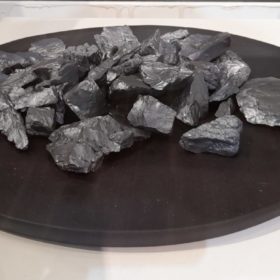
Polysilicon prices continue to drop
The China Nonferrous Metals Industry Association (CNMIA) says that polysilicon prices have fallen by more than 42% since November, when the raw material reached its highest price point.

Video: Fraunhofer ISE outlines 2023 prospects for TOPCon solar modules
Jochen Rentsch, head of department at Fraunhofer ISE, speaks to pv magazine about recent progress in TOPCon module development, including new efficiency records by JinkoSolar and Jolywood. Production costs are falling as more Tier 1 companies shift from PERC to TOPCon, and multi-gigawatt production is already a reality. Could the TOPCon solar cell segment reach a tipping point for efficiency in 2023?
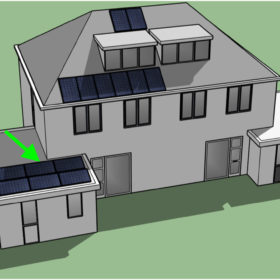
New algorithm to detect shadows in rooftop PV systems
Dutch scientists have developed a new algorithm to isolate shadow-related PV system malfunctions and estimate potential energy losses caused by shadowing.

Video: Singapore Solar Exchange CEO discusses polysilicon prices in 2023
Sakura Yamasaki, the founder and CEO of Singapore Solar Exchange, speaks to pv magazine about China’s recent decision to launch the trading of industrial silicon futures, following a year of high polysilicon prices. Yamasaki discusses the potential impact on polysilicon prices in China, the outlook for domestic price stabilization and risk mitigation, and what this might mean for the global solar industry in 2023.
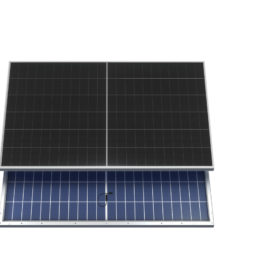
Hanersun releases 695 W TOPCon solar module with 22.37% efficiency rating
China’s Hanersun has unveiled its HItouch 6N module series, which is based on n-type TOPCon tech, 210 mm wafers, and half-cut cells. The monofacial and bifacial modules feature power outputs ranging from 605 W to 695 W and efficiency ratings of 21.38% to 22.37%.
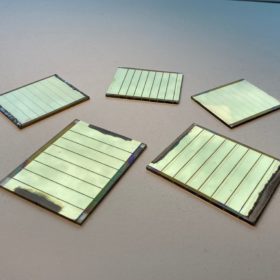
Techniques to build thermally co-evaporated mini perovskite solar panels
Scientists in Singapore have reviewed all thermal evaporation techniques for the production of perovskite solar cells and modules. Despite limitations, the new methods could lead to high production throughputs and more efficient products.
