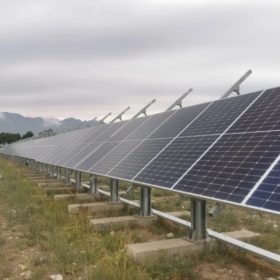
JA Solar reveals results of year-long n-type, p-type tests
JA Solar said that tests have shown that n-type modules have a 3.9% higher power yield than their p-type counterparts. TÜV Nord has confirmed the results.
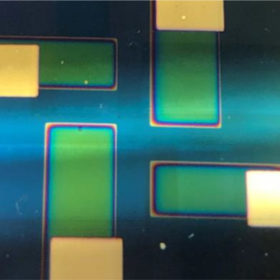
Inverted perovskite solar cell based on polymer-coated steel substrate achieves 16.5% efficiency
Scientists in the Netherlands have built a perovskite solar cell with a polyamide-imide (PAI) planarization layer to serve as an insulating layer. The device has an open-circuit voltage of 1.11 V, a short-circuit current of 19.9 mA cm–2, and a fill factor of 0.75.
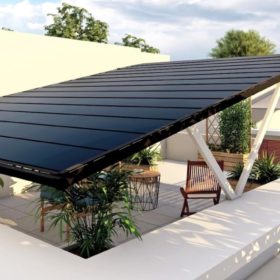
Integrated solar rooftop, gazebo solutions for residential applications
India’s SunEdison has partnered with US startup Arka Energy to provide the Arka collection of solar roof and gazebo solutions in India.

German-Dutch consortium to build 500 kW offshore solar pilot in North Sea
Germany’s RWE is partnering with offshore PV specialist SolarDuck to build a 0.5 MW floating solar plant near an offshore wind farm in the North Sea.
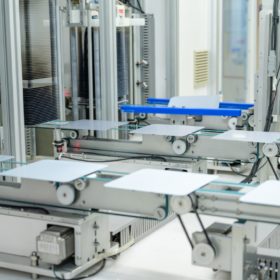
Chinese PV Industry Brief: Solar glass capacity hits 64,000 MT per day
The Chinese government has revealed that the nation’s solar glass capacity has reached 64,000 metric tons per day, while State Grid Corp. of China has announced plans to allocate CNY 26.07 billion ($4.3 billion) for solar incentives.
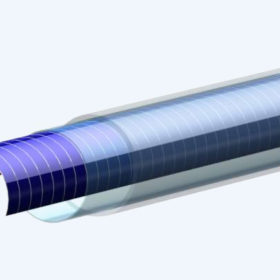
ZSW, Tubesolar achieve 14% efficiency for thin-film agrivoltaic solar tubes
TubeSolar and the Centre for Solar Energy and Hydrogen Research Baden-Württemberg have achieved a power conversion efficiency of 14% for a photovoltaic film based on perovskite.

World’s third-largest PV system on a stadium roof reaches completion
The stadium of German football club SC Freiburg hosts a 2.4 MW rooftop solar array relying on heterojunction modules provided by Swiss manufacturer Meyer Burger.
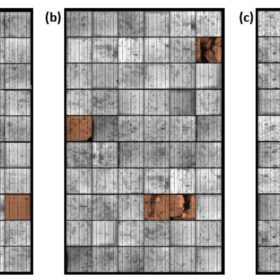
Small cracks have negligible effect on solar cell performance
UK researchers have found that crack percentages of up to 11% have a very limited impact on solar cell performance. They also ascertained that hotspots are likely to arise when the crack percentage is in the range of 11 to 34%.
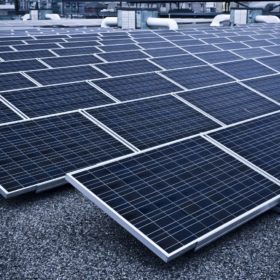
There’s big money in recycling materials from solar panels
Recycling solar panels keeps them out of landfills, but also provides much-needed raw materials with Rystad Energy projecting a value approaching $80 billion by 2050.
US government invests $56 million in solar manufacturing and recycling
The initiatives will support recycling processes, manufacturing perovskite PV cells, boosting thin-film cadmium telluride module manufacturing, and creating easier and more effective pathways to commercialization.
