
Submersing modular raft for floating photovoltaics
Developed by a Dutch consortium, the Hide and Shine Floating Solar (HAS FPV) technology is claimed to be extremely resistant to storms and harsh weather conditions. The modules can be submerged totally or partially and, in case of a severe storm, they can be submerged up to two meters below the surface.
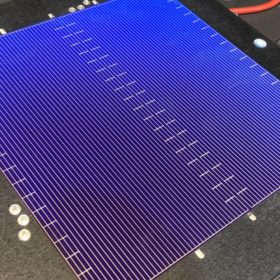
Chinese PV Industry Brief: Wafer prices rise as Aiko Solar halts shares offering
Manufacturers Longi and Zhonghuan Semiconductor have both raised the price of their 182mm wafers while holding the cost of their other products as rival Shuangliang Eco-energy signed deals for more wafer production equipment.
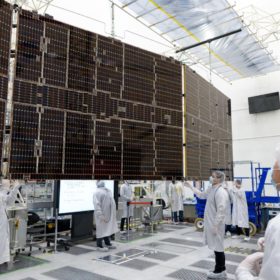
Psyche asteroid mission will be PV-powered, says NASA
NASA has said that it will explore a large, metal-rich asteroid with a remotely operated craft powered by two cross-shaped solar arrays.
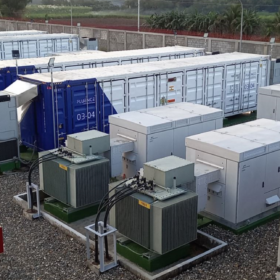
IHS Markit: Battery prices won’t fall until 2024
The London-based analyst has published a series of clean tech predictions for the year which also highlighted the rising proportion of sub-5MW solar projects in the global market, and cheaper clean energy financing costs even as panel prices continue to rise.

India’s solar cell imports rise as domestic module production expands
The nation imported solar cells worth more than $633 million from April to the end of last year, a figure higher than the value imported during the whole of the 2020-21 fiscal year.
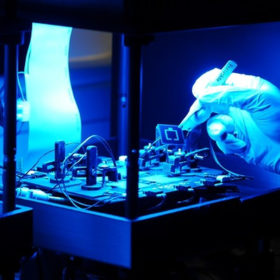
Hanwha Q Cells, Helmholtz-Zentrum Berlin claim 28.7% efficiency for 2T perovskite-silicon tandem solar cell
The Korean manufacturer and the German research center were able to improve the performance of their jointly developed tandem solar cell by almost one percentage point.
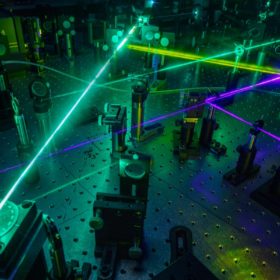
Terahertz, microwave spectroscopy for more accurate PC cell assessments
A German research group has used spectroscopic methods based on terahertz or microwave radiation and has discovered that they might help with more precise assessments of the characteristics and performance of solar cells. Their proposed approach purportedly enables the evaluation of maximum possible efficiency levels for emerging materials such as perovskites in solar cells.
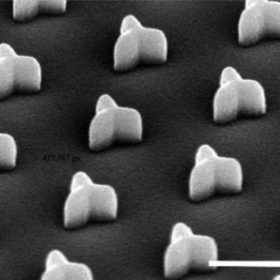
Spectrum splitters to raise efficiency of perovskite-silicon tandem solar cells
Researchers in Canada have conducted a series of simulations to understand how spectrum splitters may raise the efficiency of two-terminal tandem solar cells and have found that efficiency gains may be of up to 6%. The proposed cell configuration was also found to be economically competitive.
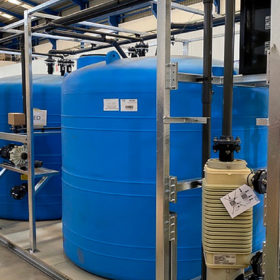
Hybridizing PV, redox flow batteries and geothermal heat pumps
A Spanish consortium is equipping one of Madrid’s largest metro and bus stations with a hybrid system that combines PV, geothermal pumps, and vanadium redox flow batteries to provide cooling and heating.

Mitrex releases solar brick for BIPV facades
Mitrex solar facades are being installed on a 7000 square feet area on a building in Canada, producing an estimated 90,000 kWh of power annually.
