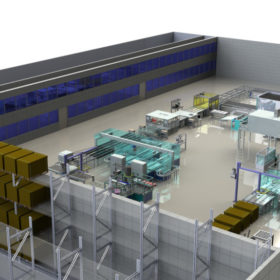
Aurinka wants to open 300MW solar module factory in Spain
The factory is expected to begin operating with an annual capacity of 300 MW and to produce bifacial modules with a power output of 600 W.
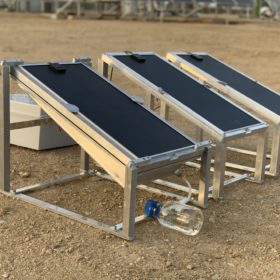
Fully PV-driven system to produce water, electricity, crops
Researchers in Saudi Arabia have fabricated an integrated fully PV-powered system to extract fresh water from the atmosphere. The system uses excess heat from the solar modules to evaporate and condense water that can then be used to grow crops. Part of the water is also used to cool down the solar modules through an active cooling technique.

Bluebird Solar expands PV module capacity to 300MW in India
Delhi-based PV manufacturer Bluebird Solar has added a new fully automatic manufacturing line equipped with the latest mono-PERC, half-cut multi-busbar cell technology.
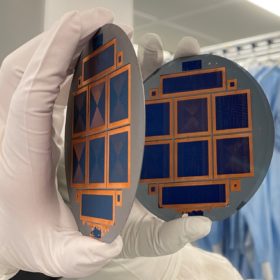
Copper-plated heterojunction solar cell with 22.1% efficiency, 0.99 bifaciality factor
Built by a Dutch-Chinese research team, the cell is relying on a new type of hybrid-shaped Cu finger consisting of a rectangular bottom part and a round top part, which was integrated into the cell through a 2-step electrochemical deposition process. The Cu-plated device outperformed both optically and electrically a reference cell fabricated via screen printing.
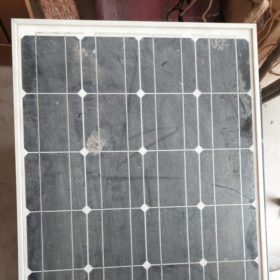
Roadmap for solar module recycling in Bangladesh
Bangladesh currently does not have a recycling center for PV module recycling. But according to a group of local scientists, the country could evolve into a regional hub for PV waste recycling if proper guidelines are implemented.
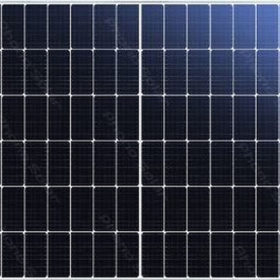
Phono Solar introduces 560W TOPCon solar module with 21.72% efficiency
The panel is part of the company’s new TOPCon module series, which also includes a 430W product with an efficiency of 21.99%.

Chinese PV Industry Brief: Daqo could make 125,000 tons of poly this year
Also, heterojunction module manufacturer Huasun has begun assembling production lines at its new 2GW factory and Trina Solar has agreed to buy 290 million wafers from Beijing Jingyuntong Technology.

Solar-powered self compacting garbage can
The city government of Florence, in Italy, is installing solar-powered, self-compacting garbage cans that are claimed to reduce emptying operations by 94% compared to traditional bins. The devices were provided by Korean manufacturer Ecube Labs.

Kaneka raises solar module prices by 20%
The Japanese manufacturer blames increasing wafer prices and logistics costs for its decision.
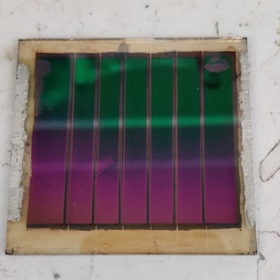
Semi-transparent perovskite solar cell with 13% efficiency, 27% transparency
Developed for applications in BIPV, vehicle-integrated solar and smart glasses, the solar cell was built with an ultra-thin, semi-transparent, triple-cation perovskite film and gold nanorods (Au NRs). The device achieved an open-circuit voltage of 1097.1mV, a short-circuit current of 17.11mA/cm2 and a fill factor of 73.12%.
