
Chinese PV Industry Brief: CPIA expects no more than 55 GW of new PV capacity this year
The world’s biggest solar market is expected to add between 45 and 55 GW of new solar in 2021, the head of the China Photovoltaic Industry Association has revealed. Furthermore, Longi has further lowered its wafer prices and Xinyi Solar said it wants to build a new US$942 million solar glass factory in Yunnan Province.

Solar for hydroponics
An international research team has examined combining solar power generation with energy-intensive hydroponic horticulture and has found that this may be a viable solution depending on project size and available incentive policies. Their approach considered various factors impacting PV system efficiency, including environmental factors, the type of solar array, and the electricity demand from the hydroponic farm.
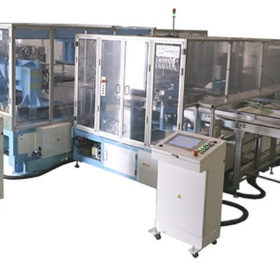
Solar module disassembly equipment from Japan
Developed by Japanese PV equipment provider NPC Incorporated, the solar module disassembly line is claimed to enable the reuse of frames, junction boxes, intact broken glass, solar cells and EVA sheets.
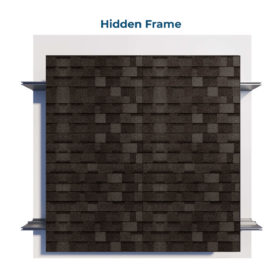
Canadian BIPV maker releases 350 W shingle-mimicking modules
The panels match the look of composite shingles and come in four different shades.
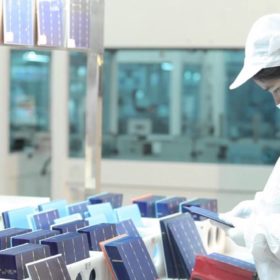
US manufacture of solar modules, trackers, inverters incentivized in Build Back Better
In a draft of the Build Back Better infrastructure plan released by the Senate Finance Committee, domestic manufacturing of solar PV and balance-of-system components would qualify for incentives.
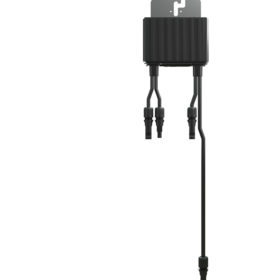
SolarEdge launches new power optimizers for residential PV
The optimizers are available in two versions that can be used with modules of up to 440 W and 500W. The devices have an efficiency of 99.5% and come with a 25-year guarantee.
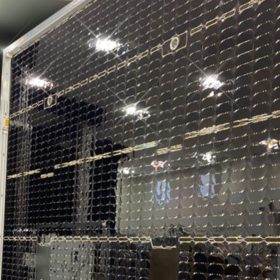
US aerospace manufacturer Rocket Lab takes over space solar cell maker Solaero
Rocket Lab has acquired space solar cell maker Solaero for $80 million. The latter operates an 11,000m2 manufacturing facility in New Mexico and produces multi-junction cells with efficiencies ranging from 29.4% to 32%.
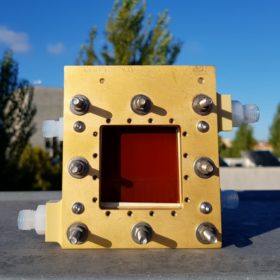
Solar redox flow cell for residential energy storage
The device was designed by scientists in Portugal to optimize light absorption by the semiconductor and ensure an effective diffusion of redox species while offering minimal electronic and ionic transport resistance. The cell has a 25cm2 photoactive area and relies on ferrocyanide/anthraquinone redox flow chemistry and a nanostructured hematite photoelectrode.

Low-bandgap GaInNAsSb solar cell for multi-junction architectures
Developed by researchers in Finland, the solar cell is intended to be used as part of lattice-matched multi-junction solar cells. It achieved a short-circuit current density of 15.2 mA/cm2 and external quantum efficiency of 0.79.

US House unanimously passes forced labor bill for China’s Xinjiang region
The Uyghur Forced Labor Prevention Act would ban all imports from China’s Xinjiang region, unless the US government determines that products were not made with forced labor. The region supplies about 50% of the world’s polysilicon, which is an essential material in solar PV.
