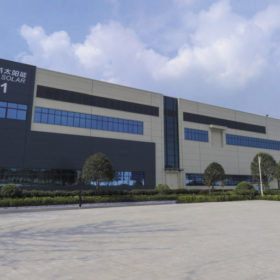
Chinese PV Industry Brief: A 20 GW wafer factory under construction and more polysilicon capacity
Fuxing New Energy is building a wafer factory in Anhui Province and Tongwei is moving forward with its plan to increase polysilicon capacity to 430,000 metric tons by the end of 2023.
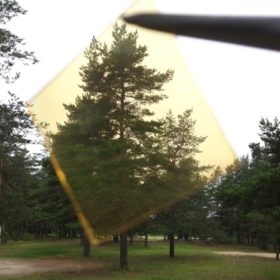
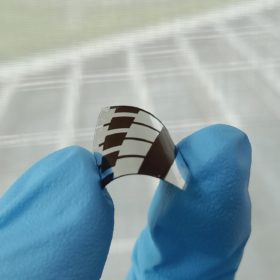
Semi-transparent antimony trisulfide PV cell for solar window applications
The 5.5%-efficient cell was fabricated through a low-temperature, two-step manufacturing process that is compatible with existing window glass manufacturing technology. Cells made with 70nm antimony trisulfide films achieved the best fill factor of around 57%, while the highest power conversion efficiencies were achieved with films ranging from 70 to 100nm.
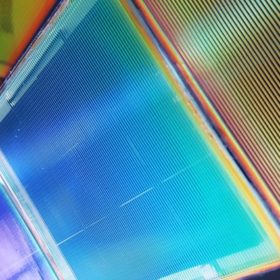
Colored optic filters for BIPV products
Dutch researchers have used optic colored filters to make building-integrated PV products more suitable for urban environments with cultural heritage value. They discovered that the filters do not affect a cell’s open-circuit voltage and fill factor, but only the short-circuit current.
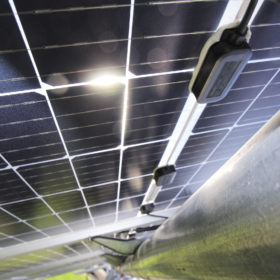
Behind PID in bifacial solar cells
New research from Germany outlines mechanisms behind a form of potential-induced degradation specifically affecting the rear side of bifacial solar cells. Results suggest that the issue may be more complex than previously thought; and avoiding irreversible damage to cells in the field will require a rethink of testing standards.
JinkoSolar on its PV capacity expansion plans and the challenges facing solar
Dany Qian, Vice President of Chinese PV manufacturer JinkoSolar speaks to pv magazine about the 2021 solar market and what’s in store for 2022, including capacity ramp-ups, the replacement of aluminum PV module frames, and a focus on n-type technology, despite continued supply chain challenges.
Canadian Premium Sand to build solar glass factory in Manitoba
Canadian Premium Sand has revealed plans to build a solar glass manufacturing facility in the Canadian province of Manitoba.
The weekend read: Solar PV development disrupted
It may be the best of times, or it’s the worst – it rather depends on who you talk to. Either way, 2021 has not been a dull year in the global solar industry. Polysilicon and commodities prices, shipping costs, tariffs, and energy shortages have all taken turns to give the supply chain a beating, but has it sent PV development off course?
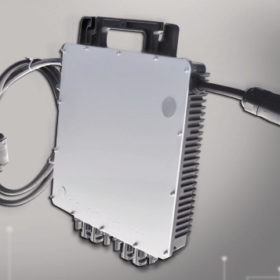
Chinese PV Industry Brief: Microinverter manufacturer Hoymile raises $880 million through IPO
The Hangzhou-based microinverter maker is now listed on the Shanghai Stock Exchange (SSE).

U.S. Trade Commission recommends extension of Section 201 solar tariffs
SEIA responds that a new round of tariffs will hamper U.S. solar development and forestall this administration’s vision of becoming a world leader in clean energy.
Google lends a hand in the search for new solar cell designs with open-source tool
Scientists in the United States developed a computer simulator that can calculate the conversion efficiency of different solar cell materials and configurations – helping to guide research and optimization of new cell designs. The simulator is available to researchers as an open-source tool to save time and spot the best opportunities for optimization of any given approach.
