ITRPV: More work needed to process 210mm wafers
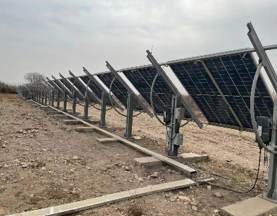
In an update to its annual International Technology Roadmap for Photovoltaics, German engineering association VDMA discusses the readiness level for various technologies in PV cell and module manufacturing, finding that more process development is needed for 210mm wafers – the largest format currently on the market – to match the throughputs that will soon be achievable with smaller formats including 182mm.

US International Trade Commission says that Section 201 tariffs should be extended
The issue now moves to President Joe Biden who will decide whether or not to extend the tariffs beyond their February 2022 expiration.

Hunting the sun with Harris hawks optimization algorithm
An Iranian-Canadian-based research group has conceived a nature-inspired algorithm to estimate the model parameters of PV systems. The proposed tool mimics the exploring, exploiting and attacking strategy of the Harris hawk, a bird of prey species that cooperates when hunting.
Ultra-thin 2D perovskite solar cell with 18.3% efficiency
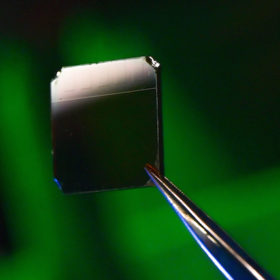
The solar cell was built with a layer of organic cations between the iodide on top, and lead on the bottom enhanced interactions between the layers. Its creators designed the device after they discovered that, when the sunlight hits a 2D perovskite, it contracts the space between atomic layers in the material.
UPDATE: Spanish start-up offers flexible kit for balcony solar power generation
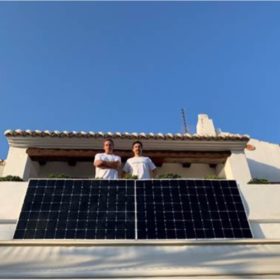
The kit consists of one or two modules, a microinverter, and a five-meter cable. Thanks to its plug-in technology, it can be connected to any electrical outlet and immediately begin generating electricity.
Korean research institute claims 12.2% efficiency world record for flexible CTZS solar cell
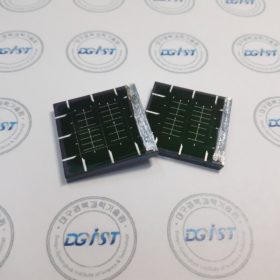
Korean manufacturer SolarFlex Ltd will now seek to bring the solar cell to commercial production.
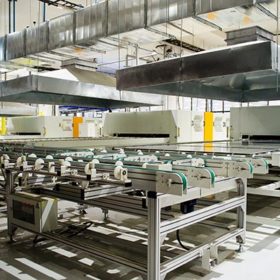
Tata Power to set up 4 GW vertically integrated solar factory in India
The Indian company is planning to invest INR 3,000 crore ($403 million) in the new manufacturing facility.
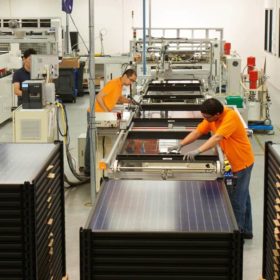
Australian solar manufacturers respond to country-wide stock shortfalls
As Australia, like much of the world, battles with shortfalls in supply as solar module prices rise and Chinese companies’ stocks decrease, the country’s only manufacturer, Tindo Solar, has opted to release emergency stocks. Likewise, Chinese giant Longi is working to guarantee supply for Australia, saying its vertical integration has afforded it extra security.
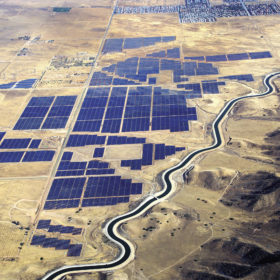
Chinese PV Industry Brief: China National Petroleum Company builds 200 MW solar park
Elsewhere, Longi has announced it has secured a wafer supply deal from Zhejiang-based TOPCon module manufacturer Dal Solar, and glassmaker Irico New Energy is planning an initial public offering.
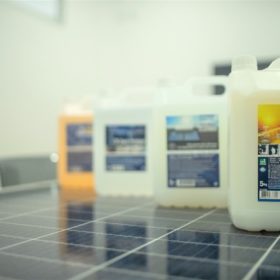
Detergent for solar module cleaning and protection
Developed and distributed by Portuguese start-up ChemiTek, the detergent is claimed to reduce water consumption by about 50% and increase energy production by up to 5%. The product was recently certified by the German laboratory TÜV Sud, according to the EN 61215 standard.
