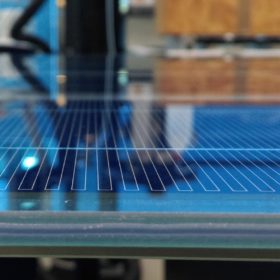
PV glass producer plans new factory in India
Auto glass producer Asahi India Glass and polymer packaging specialist Vishakha have revealed plans to jointly set up India’s largest solar glass plant in the state of Gujarat. The factory will initially have a capacity equivalent to 3 GW of solar installations per year.
Chinese PV Industry Brief: Xinte raises funds for 100,000 MT polysilicon factory, Bbetter plans new EVA solar film factory
Xinte’s parent company – TBEA – has agreed to buy new shares issued by the company for RMB2.3 billion and these funds will be used to implement its 100,000 MT expansion plan. Furthermore, EVA solar film manufacturer Bbetter Century and 8 GW factory in the Shaanxi Province.
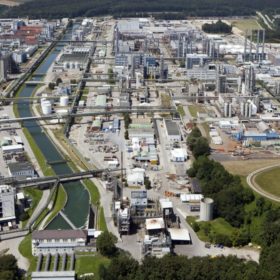
Higher polysilicon prices improve Wacker’s financials
The Munich-based chemical company was also able to significantly increase sales volumes for its polysilicon segment. In June, Wacker Chemie raised its forecast for the full year substantially.

Ever heard of photovoltachromics, the new tech for solar windows?
Researchers in China have developed a smart solar window tech based on a photovoltachromic device that is able to achieve a high pristine transmittance and to be self-adaptable to control indoor brightness and temperature. The device was assembled via a full solution process in an architecture incorporating glass, a fluorine-doped tin oxide (FTO) layer, a perovskite-based PV cell, an electrochromic gel, another FTO layer, and glass.
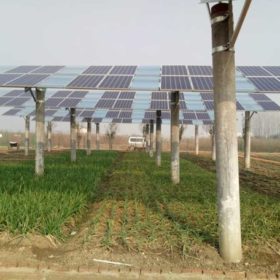
Novel plant design for agrivoltaics
Developed by Chinese researchers, the novel design methodology consists of utilizing metal brackets as mounting structures, conventional solar panels, and a grooved glass plate placed between the solar panels. According to its creators, it ensures a farmer’s average income increases by 5.14 times, including the solar power generation business. A system built with this approach should cost around €715 per kW installed.

Four-terminal heterojunction perovskite tandem solar cell with 30.09% efficiency
Developed by a Vietnamese-Korean research group, the complex PV device was built with a bottom bifacial crystalline silicon perovskite-filtered heterojunction sub-cell that is able to absorb all solar spectra in the short-wavelength range.
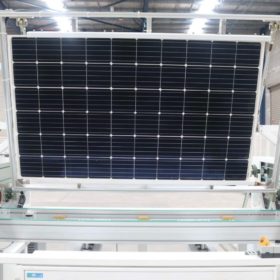
MSquare Energy becomes Australia’s second module manufacturer
Sydney-based MSquare Energy has ambitions of becoming Australia’s largest solar panel manufacturer, and it is entering the market at a pivotal moment when Australia’s panel manufacturing industry is pushing to compete on equal footing with global leaders.
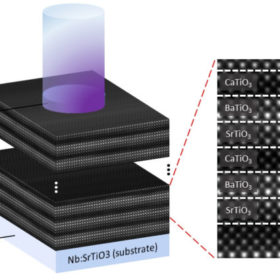
Crystal arrangement results in 1,000x more power from ferroelectric solar cells
German researchers developed a lattice arrangement of three different layers of ferroelectric crystals that created a powerful photovoltaic effect.

SunPower added 13,000 solar customers, looks to strong growth in the third quarter
In its second quarter earnings statement, the company said it expects volume and margin improvements in its residential business to continue, with Q3 volume expected to top 40% compared with 2020.
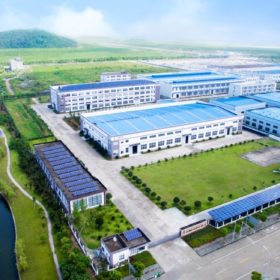
Chinese PV Industry Brief: New heterojunction equipment factory in Jiangsu province
Maxwell Technology is planning to raise RMB2.3 billion (US$356 million) for a new HJT equipment production base in Suzhou City, Jiangsu province. Furthermore, Ginlong has reported its profits grew by more than 100% in the first half of the year.
