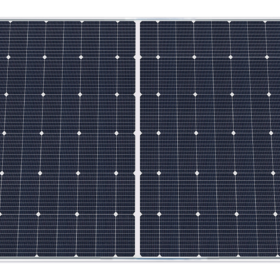
Jakson unveils 21% efficient mono PERC solar modules
The Indian solar manufacturer has announced a new Helia series of high-efficiency mono PERC PV panels, ranging from 450W to 600W outputs, and both mono-facial and bifacial categories. The multi-busbar modules apply to all installations from residential and commercial to utility-scale.

Chinese PV Industry Brief: Longi leapfrogs Jinko for first-half module shipments
There is also news of a 1.1 GW central inverter procurement contract, a pending IPO for solar cell player Runergy, and a $700 million-plus solar glass supply contract.
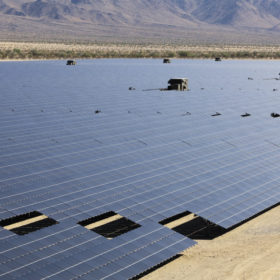
First Solar plans a 3.3 GW Indian module fab
The U.S.-based manufacturer is planning a vertically integrated thin-film solar module manufacturing facility in India. The factory will likely be built in Tamil Nadu and become operational in the second half of 2023.

Plans for HJT gigafactory in Russia
The controlling shareholder of Russian PV manufacturer Hevel Solar says it has started construction on a gigafactory to manufacture solar ingots, wafers and heterojunction (HJT) cells in the Kaliningrad exclave of Russia, between Lithuania and Poland.
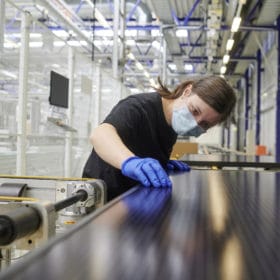
Meyer Burger plans to launch solar PV roof tiles in 2022
The Swiss group has acquired an integrated solar roof system solution from an unidentified German engineering service provider for this purpose. The aim is grow this sector from a niche market.
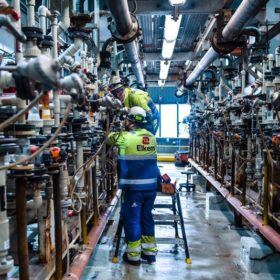
Europe had just 650 MW of solar cell manufacturing capacity at the end of 2020
The latest update to the Photovoltaics Report produced by research organization the Fraunhofer ISE has offered up the usual slew of interesting stats on the state of solar across the continent.

Maxeon secures EU cash to make its ‘stick-on’ solar panels in France
The TotalEnergies-controlled solar manufacturer will secure an, as yet undetermined chunk of a new €118.6 million low-carbon innovation fund to start producing its frameless, glass-free solar roofing products at Porcelette, in northeastern France.
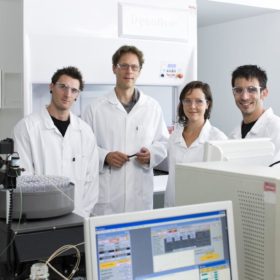
Aussie startup invents breakthrough non-toxic battery electrolyte that’s cheaper ‘by factor of 100’
Professor Thomas Nann told pv magazine Australia that a breakthrough idea was almost too simple: “Actually when we submitted the patent in the first place, the patent officers came back to us and said ‘well, that’s too trivial’ and we made exactly that argument – why did no one else do that then?” said Nann.
Chinese PV Industry Brief: Trina, Longi and Guangdong Electric Power all have reason to celebrate
…but cell manufacturer Aikosolar is expecting a reversal in fortune for the first half of the year and has blamed rising solar panel material costs.
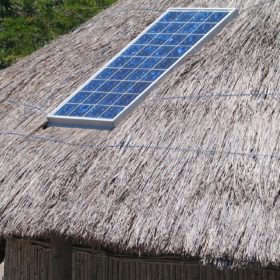
Solar manufacturers warn of 12-18 months disruption for standalone products
Potential price rises of 14% for the solar home systems that are driving access to electricity in the world’s under-served regions could signal further arrested progress towards the UN goal of universal access by 2030.
