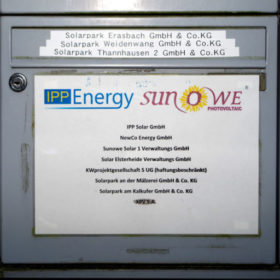
Sunowe’s panel-smuggling trial to resume in Germany
Sunowe’s trial over allegations of PV module smuggling is expected to resume on May 4. The company has been accused of not paying €20 million in anti-dumping and anti-subsidy tariffs.
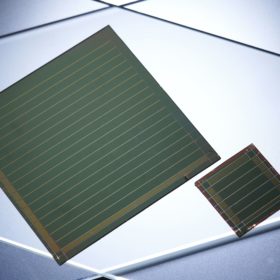
Large-area perovskite solar module with 18% efficiency
Researchers in Germany claim to have overcome the main challenge for the development of large-area perovskite PV modules – scaling up from the cell to the module level. They achieved an efficiency of up to 16.6% on a module surface of more than 50 centimeters squared, and 18% on a module with an area of 4 centimeters squared.
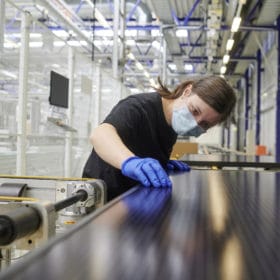
Meyer Burger unveils 400 W heterojunction solar module
The solar module will be available in three versions – white, black, and glass-glass. The products have an output of up to 400 W, but when the bifacial effect is optimally used, the output of the glass-glass module can reach up to 430 W. Both the white and black modules weigh less than 20 kg
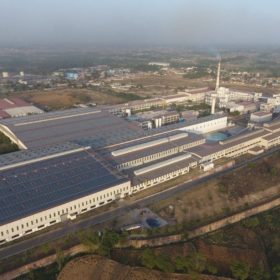
Indian manufacturer to set up new solar glass factory
Gold Plus Glass Industry, an Indian float glass manufacturer, has told pv magazine that it plans to set up a new solar glass factory with a capacity of 300 tons per day. The plant, to be built in southern India, will be operational by September 2023.
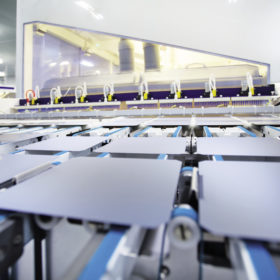
Chinese PV Industry Brief: Polysilicon prices keep rising, NEA says newly deployed PV reached 5.33 GW in Q1
Polysilicon prices rose to RMB145-150/kg this week, prompting a varied response from the major wafer suppliers. Longi won a tender to supply modules for a 100 MW agrivoltaic project held by Hubei Energy Group and GCL-Poly sold off a further 127 MW of solar project capacity to two state-owned enterprises.
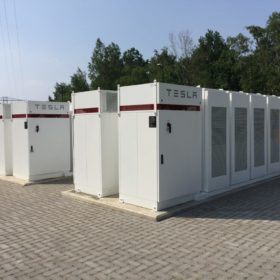
Chinese solar developer expects $0.22/W cost for lithium-ion storage in 2023
The board of Xinyi Solar has announced it expects to have to install energy storage at its Chinese solar projects from July onwards, as a result of the recently launched five-year plan.
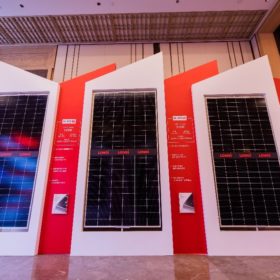
Longi unveils two PV modules for distributed generation
The two new products will be part of the Hi-MO4m panel series for rooftop applications. Their efficiency ranges from 19.2% to 21.2%.
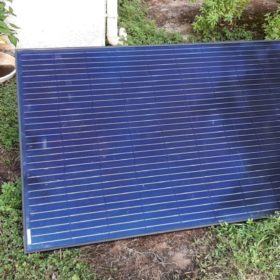
Solar kit for gardens and balconies, from France
French start-up Ekwateur is offering a solar kit consisting of a 330 W panel, a micro-inverter, a metallic structure, a monitoring sensor, and a few cables.
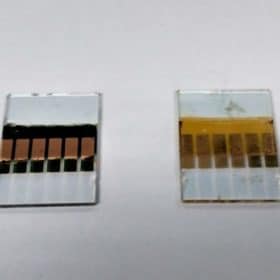
Solid-state solar cells based on metal-organic framework nanomaterials
Spanish scientists have fabricated solid-state PV cells with two different porous nanomaterials. Although low in terms of efficiency, one of the cells built with the MIL-125(Ti) metal-organic framework nanomaterial exhibited better photovoltaic performance than similar devices.

Silicon carbide passivating contact for 24%-efficient crystalline solar cells
The special passivating contact is claimed to feature high transparency, good conductivity, and at the same time, to offer enough hydrogenation for passivation. The cell built with this contact achieved an open-circuit voltage of 725 mV, a short-circuit current density of 40.87 mA cm−2, and a fill factor of 80.9%. Its certified efficiency was 23.99%.
